What's the itinerary?+
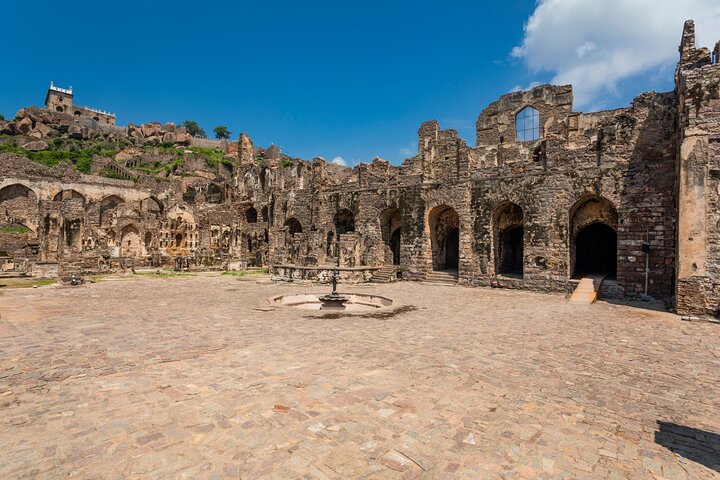
• Learn about the historic defense of Golconda Fort, which dates back to the 11th century. Initially a small mud fortress built by the Kakatiya dynasty of Warangal, it later became a significant capital for the Bahamani Empire and the Qutub Shahi sultans. Upon entering the fort, you will see its 8 km granite wall, 8 gates, and 87 bastions. Your guide will lead you through the Bala-Hisar gate to the Grand Clapping Portico, known for its unique sound reflection. Continue your tour to the renowned diamond market and climb the fort steps to reach Baradari (Durbar Hall), where you'll view the Persian wooden wheel water supply system, granaries, Ramadas Jail, Ibrahim Mosque, and the 11th-century Jagadamba Mahakali temple. From Baradari, enjoy panoramic views of Golconda and Hyderabad, including the King's and Queen's enclosures, harems, central courts, and stables for horses, camels, and elephants.
• The Qutb Shahi Tombs are located in Ibrahim Bagh near Golconda Fort in Hyderabad. They include various tombs and mosques featuring arches, columns, domes, minarets, and galleries surrounded by landscaped gardens, created by different sultans of the Qutb Shahi dynasty. The smaller tombs are one story tall, while the larger ones have two stories. Each tomb contains a stone casket above the burial vault below. Originally adorned with blue and green tiles, only remnants of the tiles remain. Additionally, the site has witnessed step wells, Turkish hamams, and the char-bagh gardens, emulating paradise.
• Puranapool, or Old Bridge, was originally called Paar-ana-pool, which means "Bride of Love" in Persian. At this site, your guide will narrate the love story of Muhammad Quli and Bagamathi, who were instrumental in the founding of Hyderabad and the kingdom of Golconda.
• Laad Bazar is among the oldest street markets in India, known for its lacquer bangles, which are often embellished with artificial diamonds. This market stretches 1 kilometer and features shops selling bangles, saris, wedding items, and imitation jewelry, alongside perfumes.
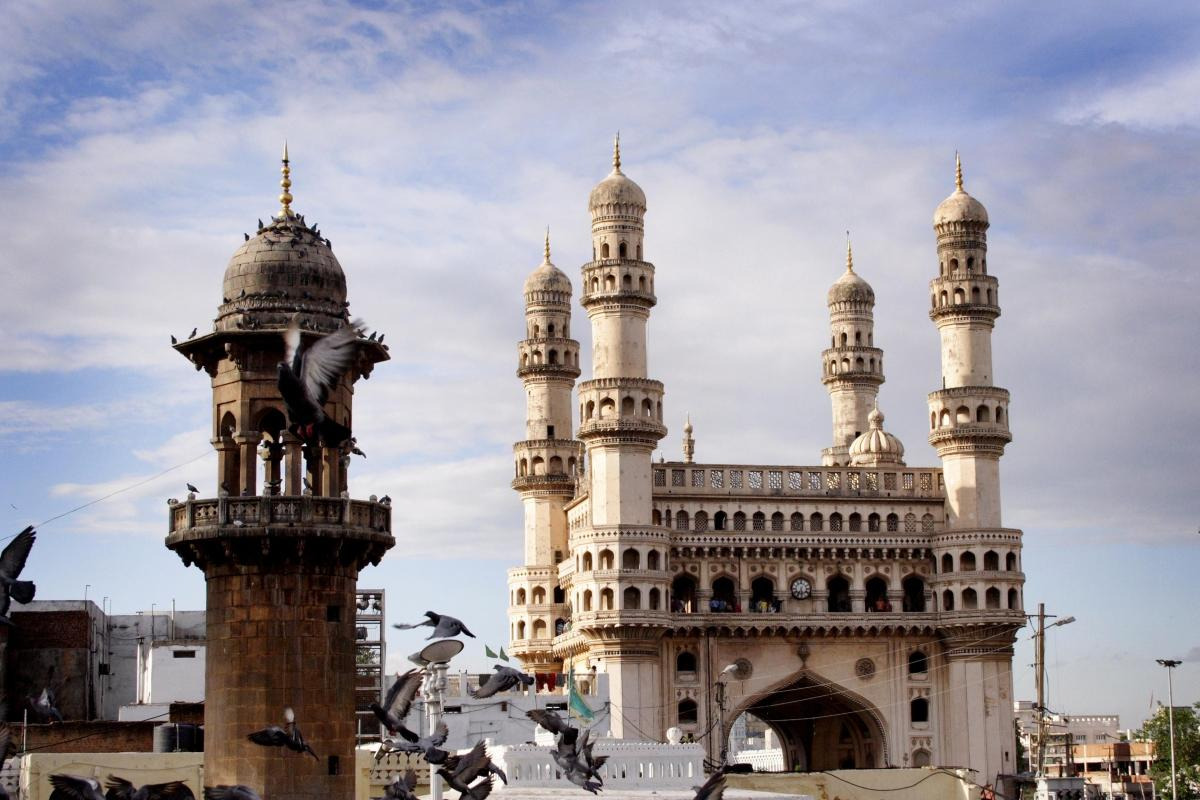
• The Charminar is an iconic symbol of India and a significant landmark in the city, situated in the historic sector established by the Qutub Shahi kings. Constructed at the crossroads of a vital trade route connecting to international markets via the port city of Machilipatnam, the Old City of Hyderabad was designed around the Charminar. The structure served as both a mosque and madrasa, showcasing Indo-Islamic architecture complemented by Persian influences.
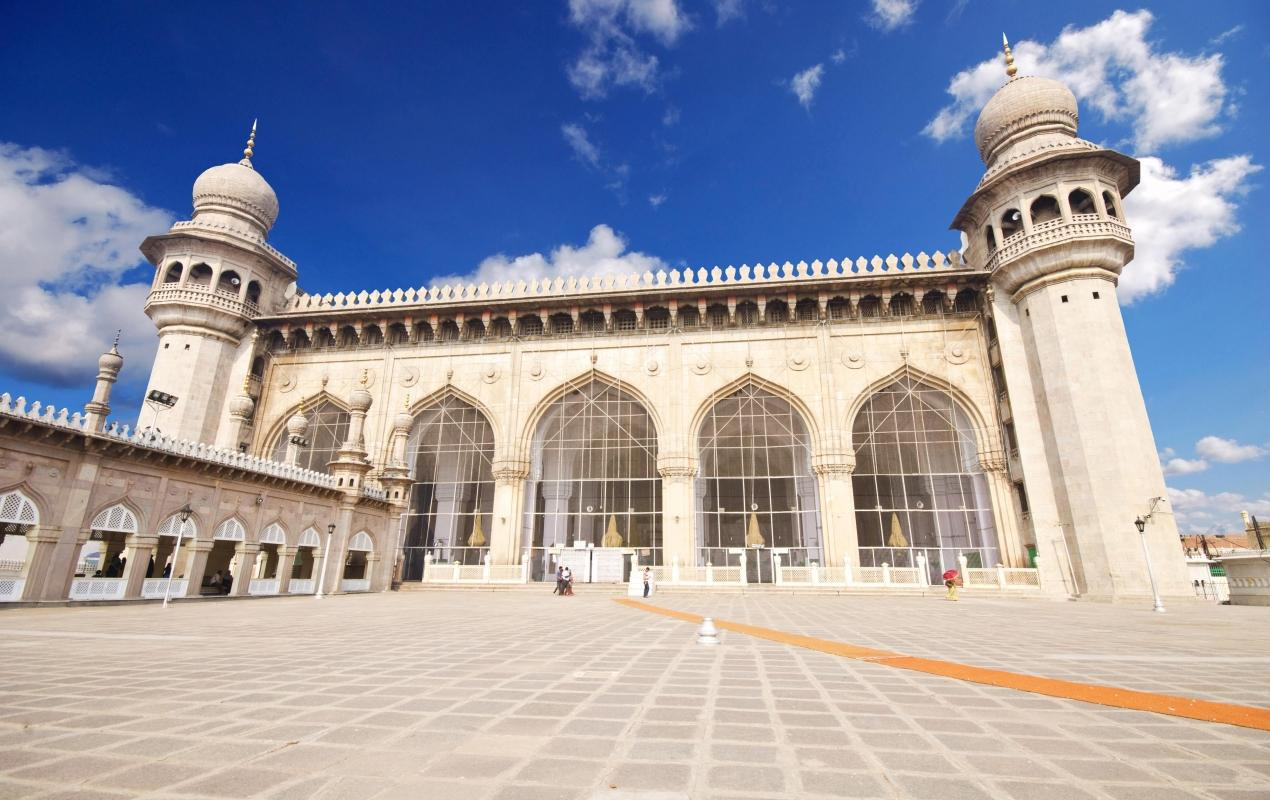
• Made from local granite, this mosque ranks among India's largest and the most significant in the city. Its arched gallery contains the tombs of all the Nizams beginning from 1803. The mosque measures 225 feet in length, 180 feet in width, and stands at a height of 75 feet.
• Nimrah Café and Bakery is one of the oldest establishments in historic Hyderabad, where you can learn to prepare traditional Irani chai and the famous Osmania cookies, along with a variety of other street foods from Hyderabad.
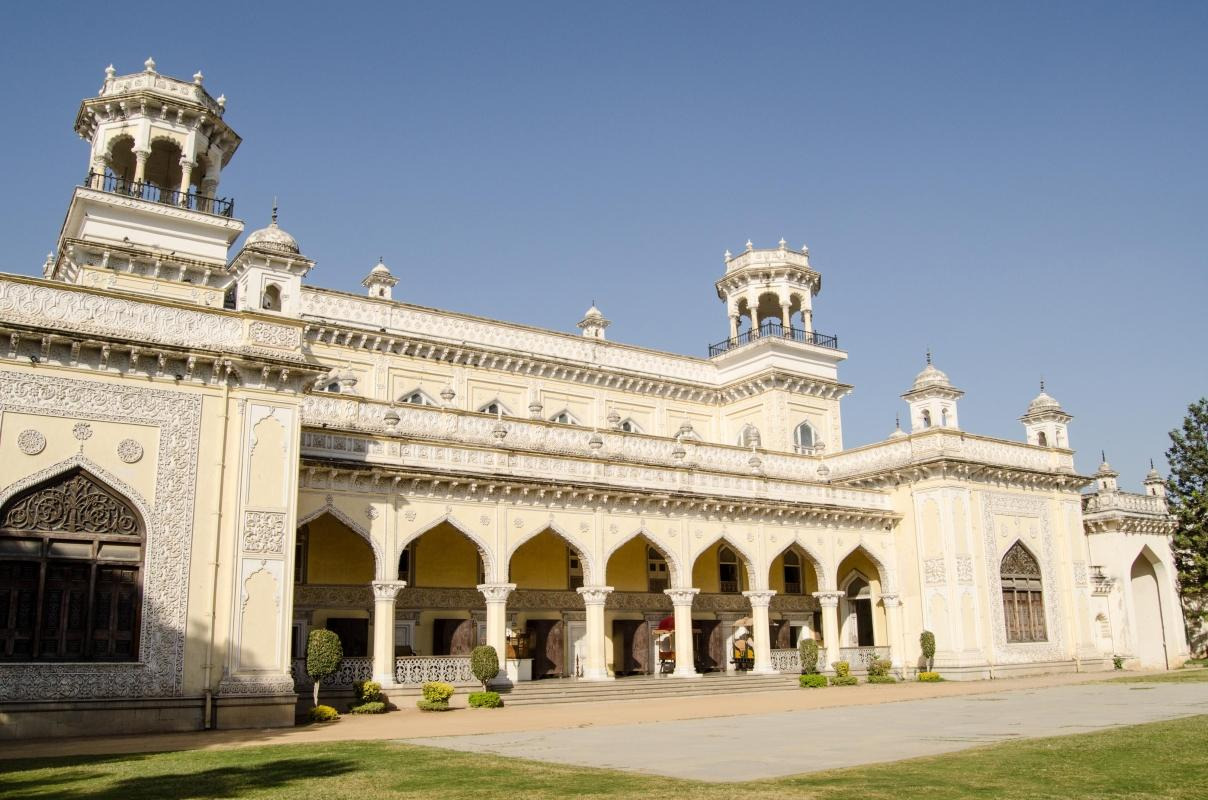
• Chowmohalla Palace, a splendid residence of the powerful Nizams of Hyderabad who ruled from 1724 to 1948, is renowned for its intricate wall and ceiling designs, a mechanical clock that has functioned for over 250 years, and its 19 Belgian crystal chandeliers in the Durbar Hall, alongside the marble platform where the royal seat, Takht-e-Nishan, was placed.
• Mozamjahi Market is well known for its fruit offerings and is located in the city's heart. Built during the last Nizam’s reign in 1935 and named after his second son, Moazzam Jah, the fruit market was