What's the itinerary?+
• An Ashurkhana serves as a mourning place for Shia Muslims during Ashura, the 10th day of Muharram. Established in 1594 by Muhammed Quli Qutb Shah, the city is home to many Ashurkhanas, which were initiated after the completion of Charminar to mark the new city of Hyderabad in 1591. The vibrant tile-mosaic decoration was finalized under Abdullah Qutb Shah in 1611. Following the Mughal conquest of Hyderabad, Aurangzeb repurposed it as a horse stable for the Mughal cavalry as a show of Sunni sectarianism.
• Built in 1911 during the reign of the last Nizam of Hyderabad State, Mir Osman Ali Khan, Pathar Gatti was constructed using stone, hence its name. The esteemed engineer Vishveshwaraiah designed it in a distinctive Osmanian architectural style.
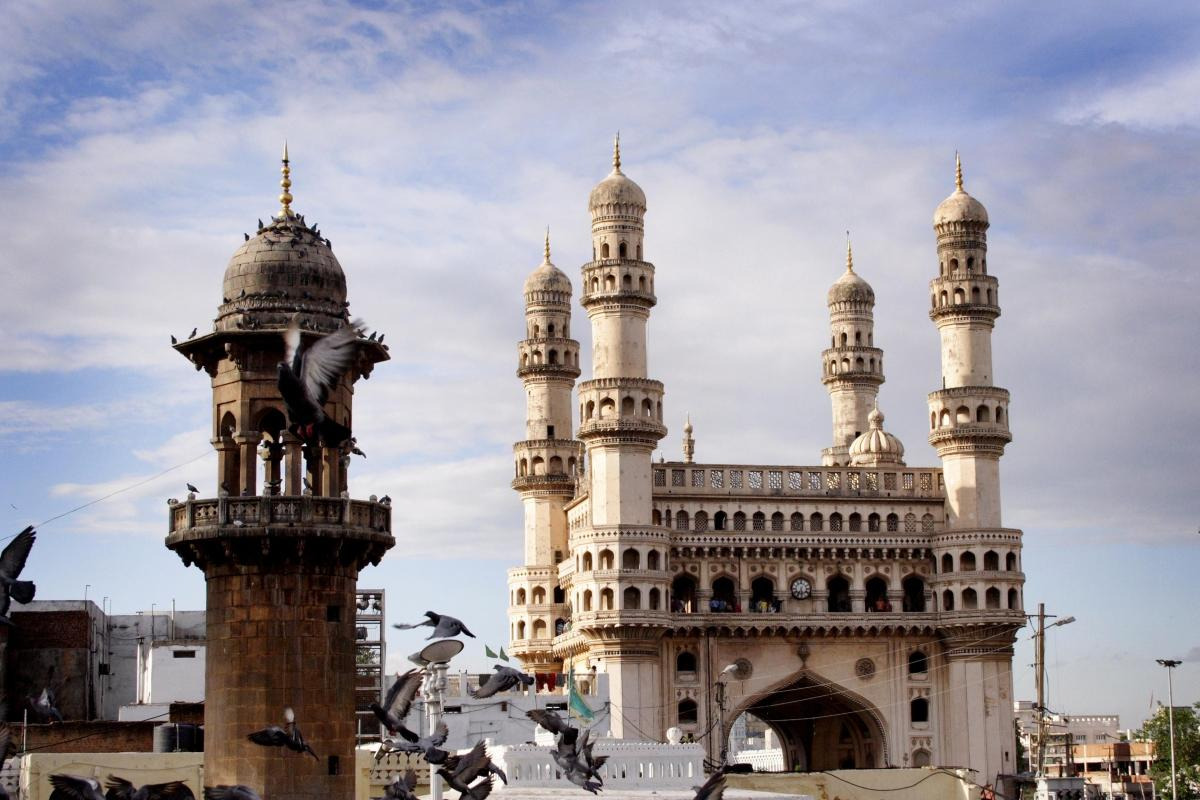
• Char Kaman, translating to four gates, were constructed in 1592 following the completion of Charminar, approximately 75 meters to the north. These four grand arches, named Charminar Kaman, Machli Kaman, Kali Kaman, and Sher-e-Batil-Ki-Kaman, stand fifty feet tall and outline an open square that previously hosted a Qutb Shahi palace.
• Located 350 feet from Char Kaman, Gulzar Houz was originally a twelve-sided octagonal water reservoir, now nearly circular, built for the hydration needs of soldiers, traders, and travelers.
• Established in 1591 by Muhammed Quli Qutb Shah, this area is known for its global tourist attraction, strategically situated between Laad Bazaar to the west and the Mecca Mosque to the southwest.
• Laad Bazaar, also known as Choodia Bazaar, is a historic market renowned for souvenirs, particularly bangles. It is among the oldest markets in Hyderabad, evoking memories of its colorful bridal bazaar past.
• Osmangunj, or Osman Gunj, is a lively historical area in central Jambagh near M J Market, recognized for its traditional charm and serves as a key commercial center for wholesale trading of spices and grains.
• Jambagh is a vibrant commercial and residential district in Hyderabad, located near Koti, Abids, and Moazzam Jahi Market. It features bustling markets, including a historic flower market, and is conveniently connected by transportation, though it often experiences heavy traffic.
• Constructed between 1933 and 1935, the Mozamjahi Market was established by the City Improvement Board during the last Nizam's governance. It was dedicated to Prince Moazzam Jah and designed as a fruit market and commercial space to link the old and new parts of the city. The market, known for its Indo-Saracenic architectural style and central clock tower, has served as a cultural and commercial center for over 85 years.
• The Public Gardens in Nampally, Hyderabad, also referred to as Bagh-e-aam, is one of the largest and oldest gardens in the city, founded in 1846. It is an important cultural site featuring several public buildings, including the State Legislative Assembly, museums such as the Art Museum and Health Museum, and cultural venues like an open-air theatre. The park offers lush lawns, pathways, and a statue of Mahatma Gandhi.
• Fateh Maidan, now the Lal Bahadur Shastri (LB) Stadium, has a history dating back to the Mughal Empire when it served as a camping ground during the Golconda siege in 1687 and was later named "Victory Ground". It became a venue for public events and military parades during the Asaf Jahi dynasty and hosted its first military parade in 1853. The stadium was renamed in 1967 in honor of former Indian Prime Minister Lal Bahadur Shastri.
• The history of the Telangana Assembly building is linked to its original