What's the itinerary?+
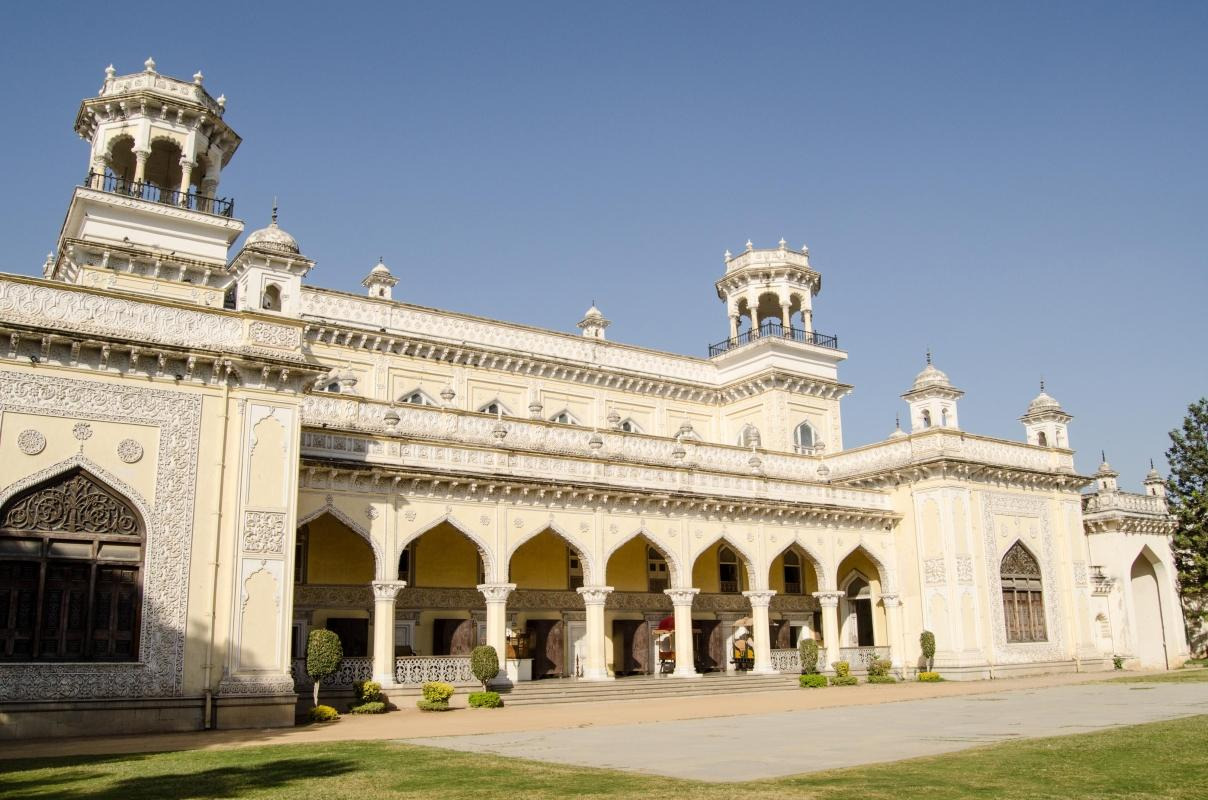
• Chowmahalla Palace is a striking artistic masterpiece. The elegantly adorned spaces highlight its role as the former meeting hall for rulers. The scenic surroundings provide a lovely setting for photography, after which you can relax among the ponds, trees, and plants.
• A historic structure over 400 years old embodies grandeur. This expansive hall has the capacity for 10,000 individuals. Enjoy the peaceful atmosphere near the water fountain. Proceed to the graves of past rulers located in the first courtyard near the entrance. Afterward, take a moment to relax on the black benches by the pond and watch the sunset.
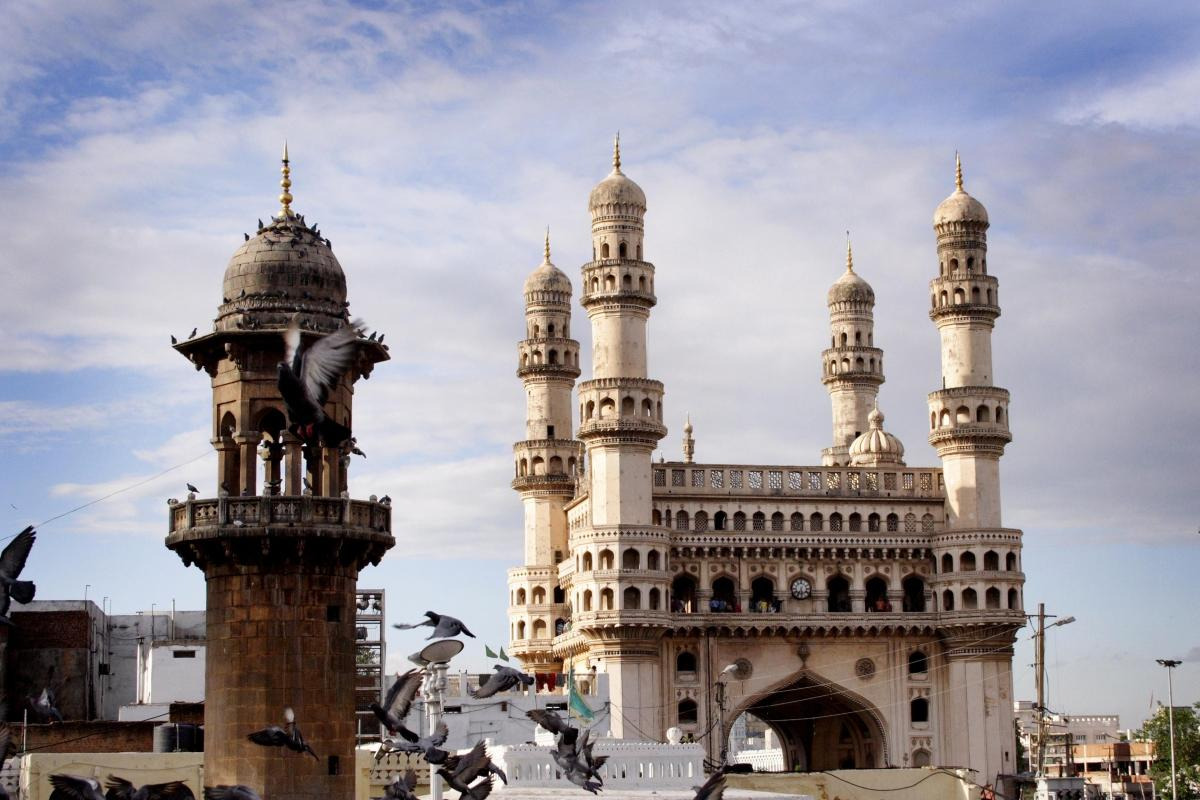
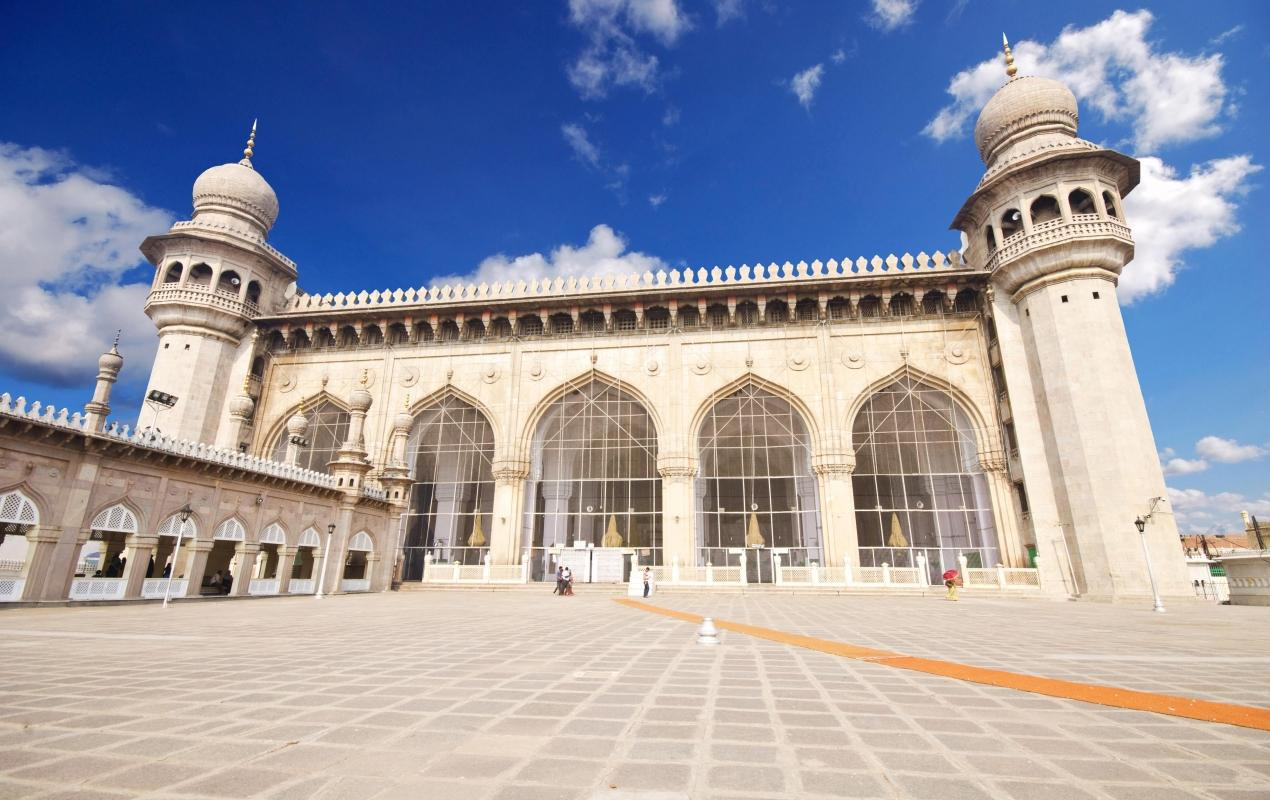
• Founded in 1591 A.D. by Muhammed Quli Qutb Shah, this renowned landmark ranks among the world's top tourist destinations. Behold Hyderabad's iconic site, conveniently located between the well-known Laad Bazaar to the west and the granite-adorned Mecca Mosque to the southwest.
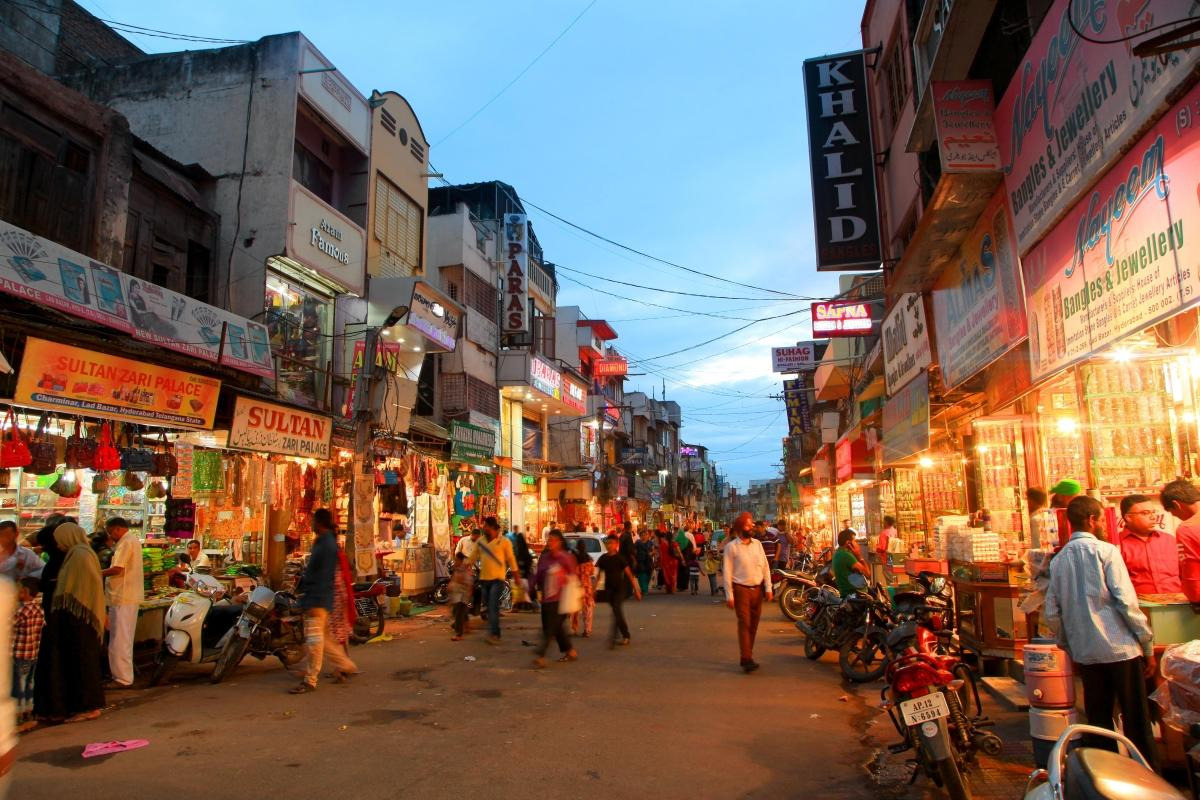
• Laad Bazaar, also known as Choodia Bazaar, is a historic marketplace famous for its souvenirs and, notably, bangles. It is among the oldest markets in Hyderabad, evoking memories of its vibrant past as a bridal bazaar full of sparkle and color.
• Gulzar Houz was constructed 350 feet from the surrounding Char Kaman. Initially a dodecagonal shape, it was later altered to an octagonal form and currently appears almost circular. It served as a water reservoir for the hydration of soldiers, traders, and travelers.
• Char Kaman, meaning "four gates," were erected in 1592 by the founder, shortly after the completion of Charminar, about 75 meters to the north. Four tall arches—Charminar Kaman, Machli Kaman, Kali Kaman, and Sher-e-Batil-Ki-Kaman—define an open square, which once housed a Qutb Shahi palace. The arches stand fifty feet high.
• Pathar Gatti was constructed in 1911 during the reign of Mir Osman Ali Khan, the last Nizam of Hyderabad State. Named for its stone construction, it was designed by the eminent engineer Vishveshwaraiah, showcasing a unique Osmanian architectural style.
• An Ashurkhana serves as a mourning place for Shia Muslims during Ashura, the 10th day of Muharram. It was founded by Muhammed Quli Qutb Shah in 1594, resulting in numerous Ashurkhanas in the city after the completion of Charminar in 1591. The intricate tile-mosaic decorations were finalized under Abdullah Qutb Shah in 1611. Following the Mughal conquest of Hyderabad, Aurangzeb turned it into a horse stable for the Mughal cavalry amidst sectarian tensions.
• The Qutub Shahi tombs comprise a series of Islamic tombs and mosques established by the Qutub Shahi dynasty kings, situated in Ibrahim Bagh near the notable Golconda Fort in Hyderabad, Telangana.
• Golconda Fort, initially named Mankal, was established on a hilltop in 1143. It originated as a mud fort under the Rajah of Warangal's rule and was fortified from the 14th to 17th centuries by the Bahmani Sultans and subsequently the Qutub Shahi dynasty. Golconda served as the main capital for the Qutub Shahi kings. The inner fort features remnants of palaces, mosques, and a hilltop pavilion rising approximately 130 meters high, offering panoramic views of the surrounding area. The site was first called Golla Konda, or Shepherd's Hill, commemorating a shepherd boy who discovered a deity there, prompting the Kakatiya king to construct a mud fort around the site. Two centuries later, the Bahmani rulers took control, and the Qutub Shahi kings later transformed it into a vast granite fort with a circumference of 5 kilometers.