What's the itinerary?+
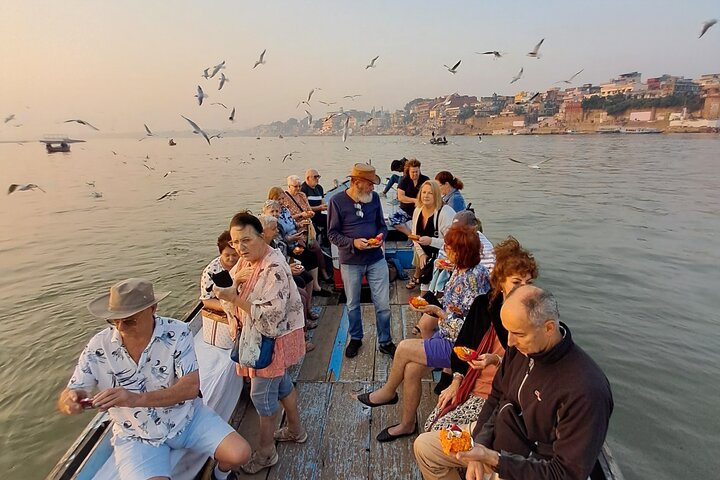
• Morning pickup from your hotel is scheduled for 6 AM, followed by a sunrise boat ride.
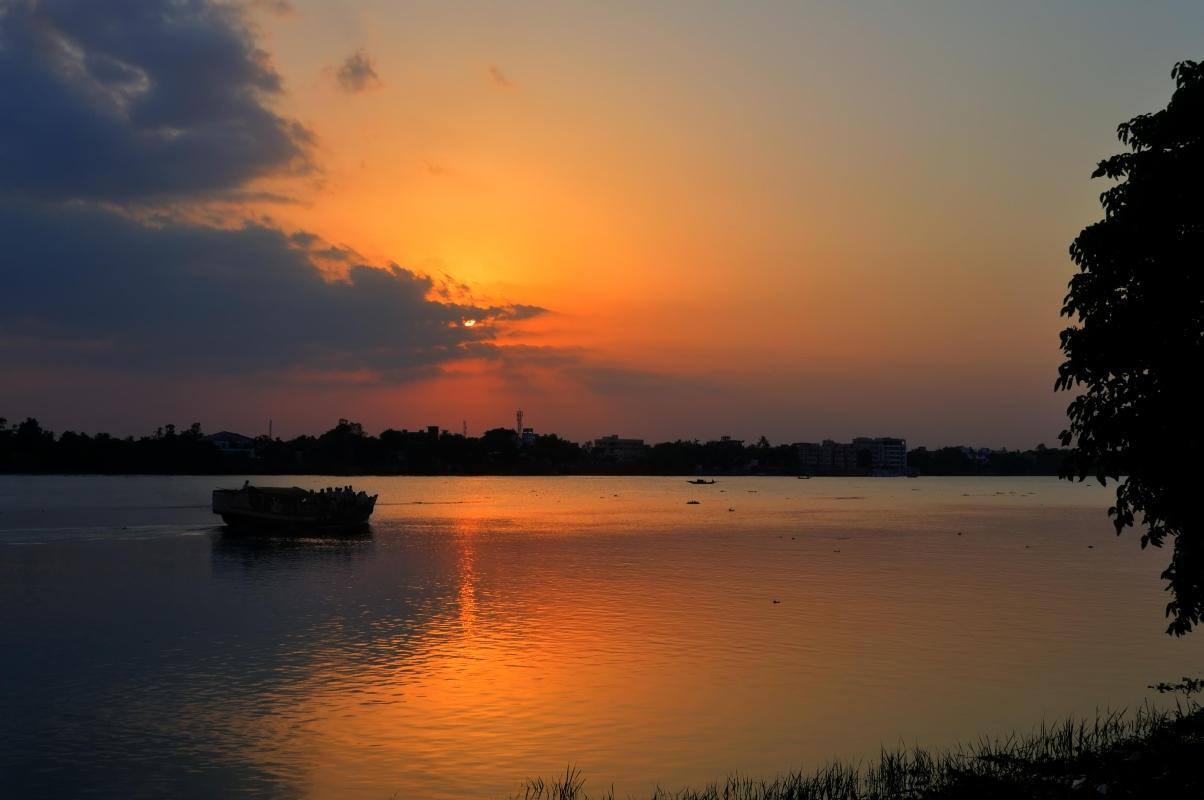
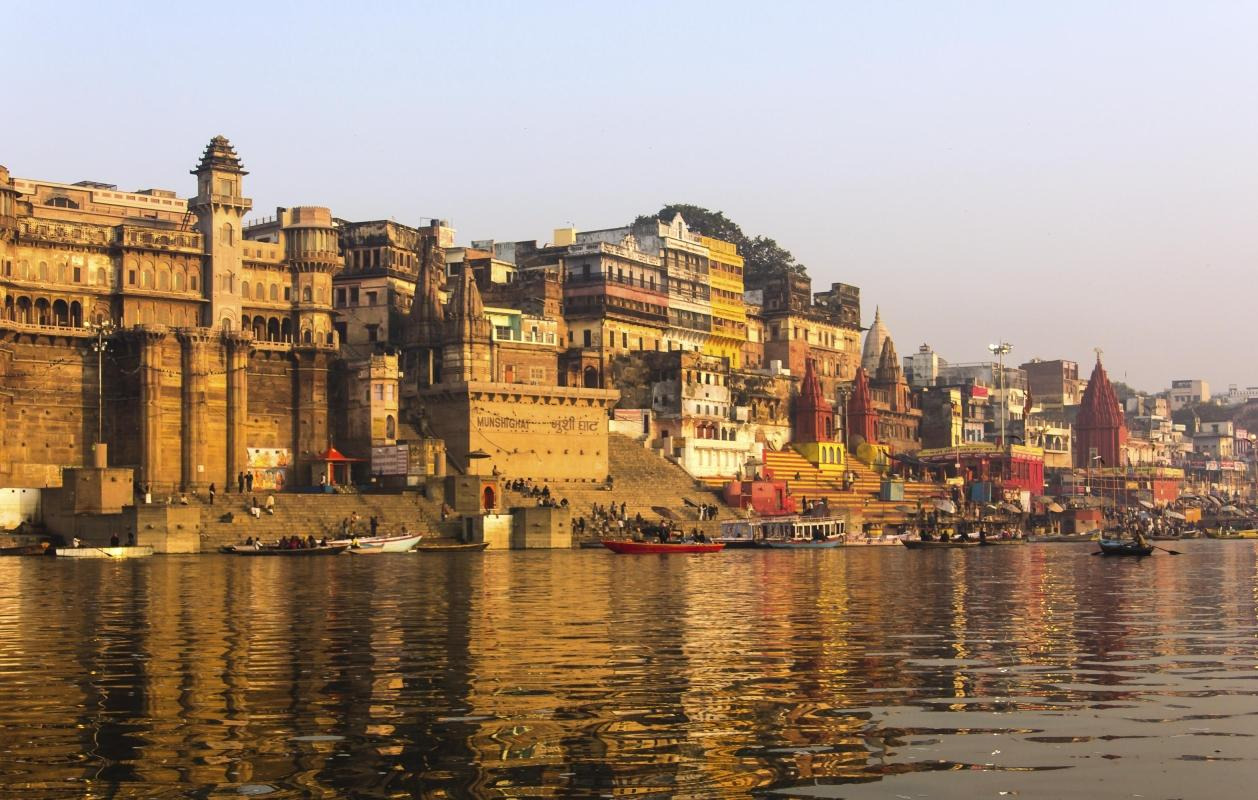
The boat journey on the Ganges starts at Dashaswamedh Ghat, proceeding to Harishchandra Ghat and then to Manikarnika Ghat. Departing when the first light of day is visible on the horizon offers a moment to enjoy the vibrant atmosphere of Varanasi. The early morning sunlight casts a beautiful glow over the river and its ghats, presenting a unique view as the sky brightens in shades of orange and pink. Locals and pilgrims gather at the ghats for morning rituals, such as bathing in the river, praying, and participating in the Aarti. The sound of chants, ringing bells, and the scent of incense enhance the spiritual environment. You can observe locals beginning their day with children playing and individuals practicing yoga.
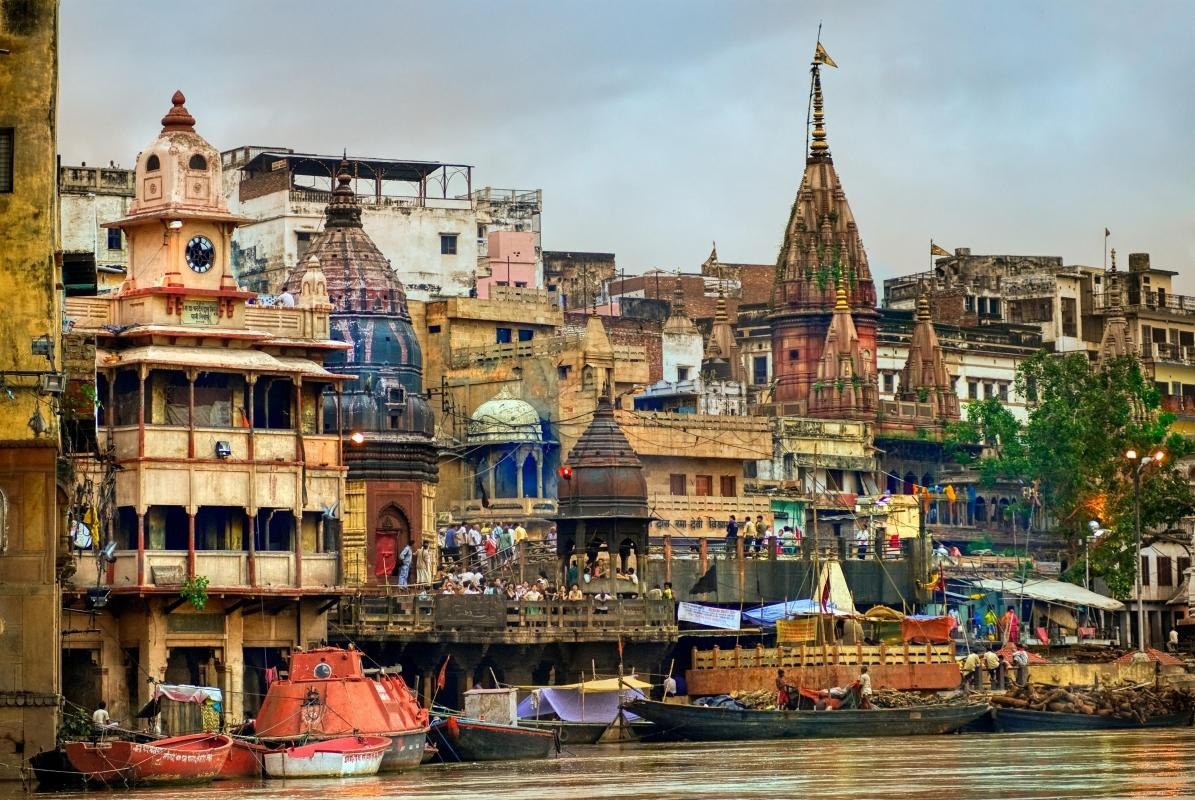
• Varanasi's Banaras Ghats comprise a famous stretch of steps along the Ganges, known for their spiritual, cultural, and historical significance. There are approximately 84 ghats, each with its unique history and character, including Dashashwamedh Ghat, known for its evening Aarti, and the main cremation ghats, Manikarnika Ghat and Harishchandra Ghat, which are said to grant moksha to those cremated there. These ghats serve as active centers where pilgrims perform rituals and witness time-honored funeral practices, making Varanasi a vibrant region to explore.
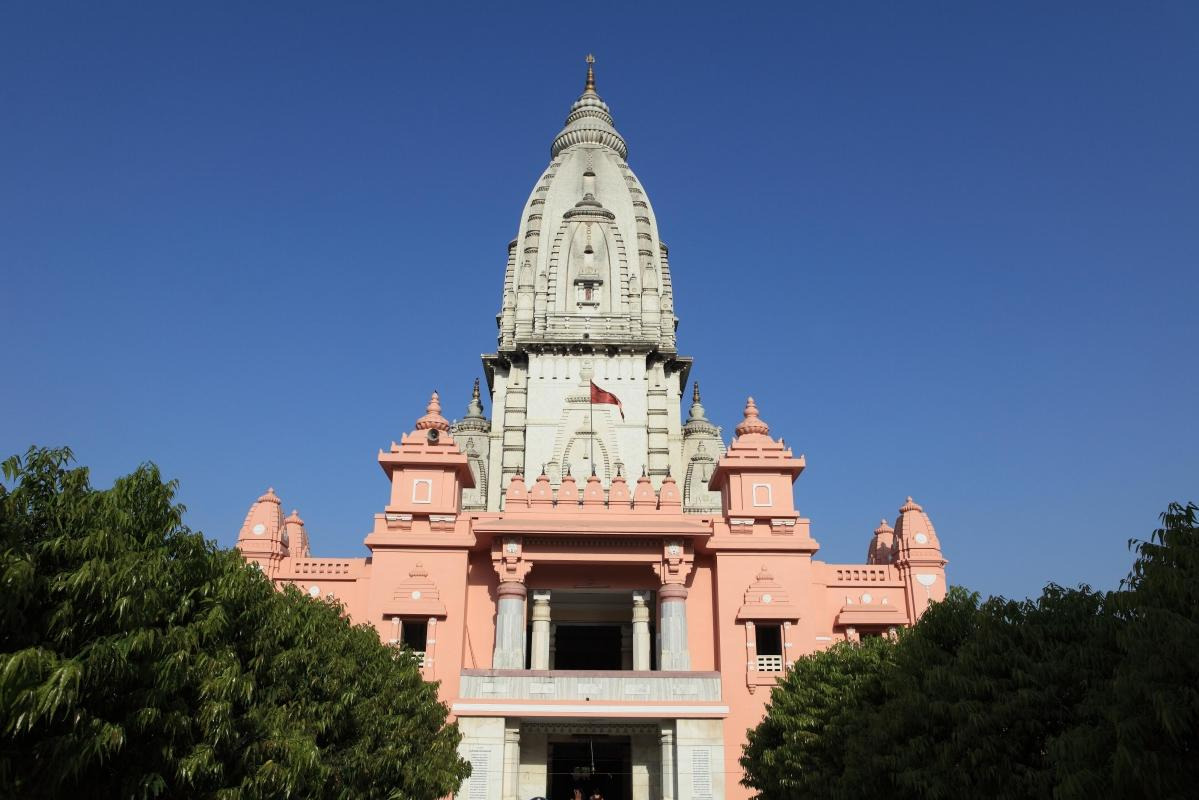
• The temple's history is thought to extend back more than 3000 years and is described in ancient texts. It has been rebuilt several times due to invasions and damage over the years, notably in the 18th century by Rani Ahiliyabai Holker of Indore. Kashi Vishwanath Temple is a key pilgrimage site, drawing millions of devotees and visitors; it is also referred to as the Golden Temple due to the presence of 820 kg of gold.
• Following the boat ride and heritage walk, visitors will proceed to Durga Temple, an energetic and colorful site dedicated to the goddess Durga. Known as the Monkey Temple due to a historical abundance of monkeys, which have since departed, the red and gold temple offers a sense of vitality and ancient charm. Guests will return to their hotel for breakfast around 8:45 or 9:00 AM.
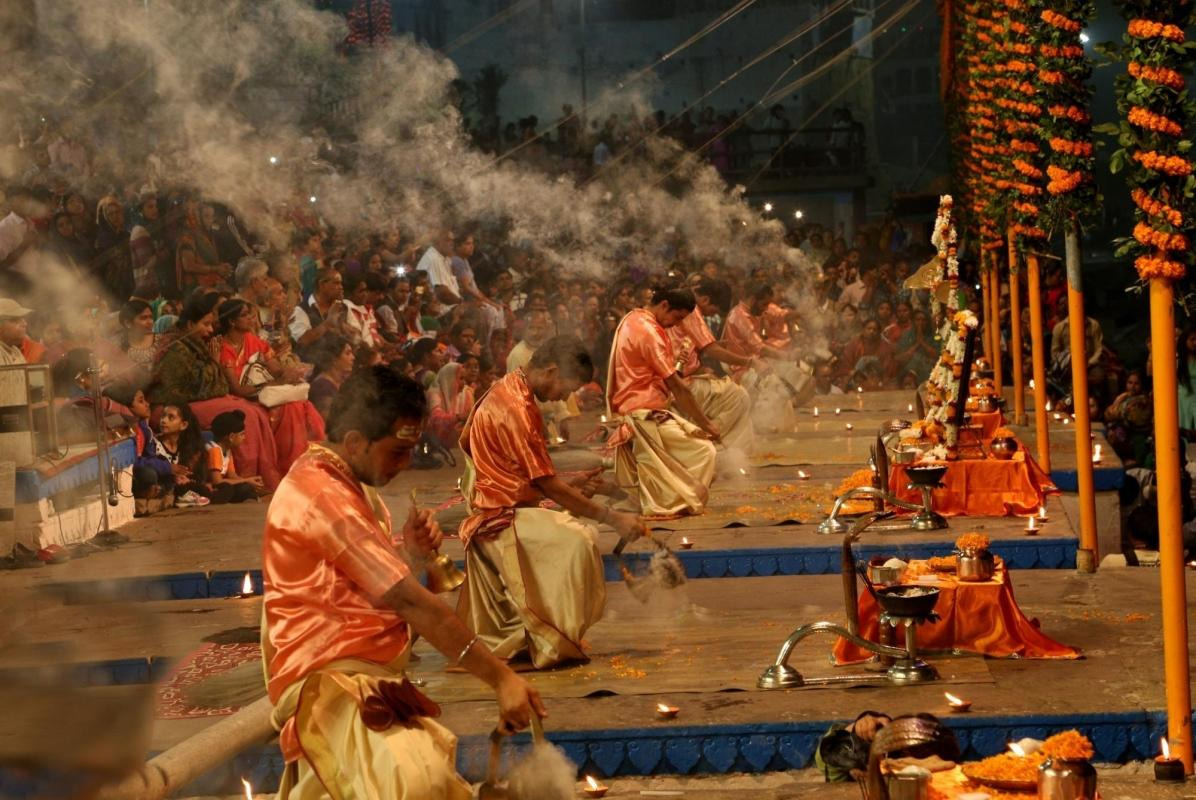
• Before sunset, participants head to the main ghat to witness the evening Aarti ceremony. This Hindu prayer is colorful and captivating, expected to invigorate those present, as it gathers a large crowd. While most Hindu prayers are private, this public ceremony is performed by seven priests after sunset, aiming for the welfare and prosperity of all. The ritual includes the use of incense sticks for fragrance, sandalwood powder for purity, multi-oil lamps for illumination, and camphor for purification of the air. Guests will return to their hotel afterward.
• Ganga Aarti is an enchanting evening ceremony involving Hindu priests performing a fire ritual worship to the Ganga River, typically at Dashashwamedh Ghat or other ghats. This ritual generally commences between 6:30 PM and 7:00 PM, though timing may vary with the season and sunset. During the Aarti, priests chant Vedic mantras, play conch shells and drums, and move large fire lamps in rhythmic unison while offering prayers. This ceremony symbolizes the soul's purification and is believed to cleanse sins. People gather to watch, sing along, and participate by offering flowers or lamps to the river.
• This ghat has existed for millennia, referenced in ancient texts, and serves as a significant cremation ground where bodies are cremated to achieve moksha or liberation. According to mythology, it has ties to deities Shiva and Parvati, with legends asserting that Parvati lost her earring here, provoking Shiva to create a whirlpool, giving rise to the name Manik