What's the itinerary?+
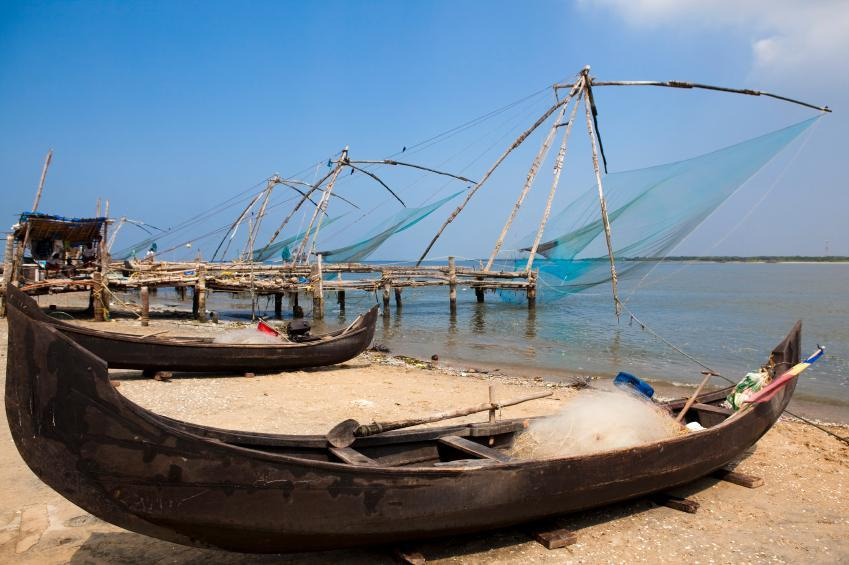
• The iconic Chinese fishing nets of Fort Kochi, resembling large hammocks drooping over the water, have become a significant attraction for tourists. Originally a fishing tool, these nets are constructed from teak wood and bamboo, operating on a balance principle. Each structure stands approximately 10 meters high and features a cantilever with a net spanning about 20 meters. Counterweights, often stones of around 30 cm in diameter, are tied to varying lengths of rope to facilitate their operation. Lights are sometimes hung from the teak posts to lure fish.
• Fort Kochi beach is popular among both tourists and locals, known for its clean environment and serene atmosphere. The presence of the Chinese fishing nets is a distinguishing feature, complemented by verdant trees lining the pathway to the beach. The beach is also the site of the renowned Cochin Carnival on New Year’s Eve. Other attractions include an array of seafood options, Vasco da Gama Square nearby, a lighthouse, and a granite promenade, offering a stunning sunset view. Occasionally, cargo ships can be spotted passing by, and remnants of Fort Immanuel are visible. A section of the beach is restricted, controlled by the Indian Navy.
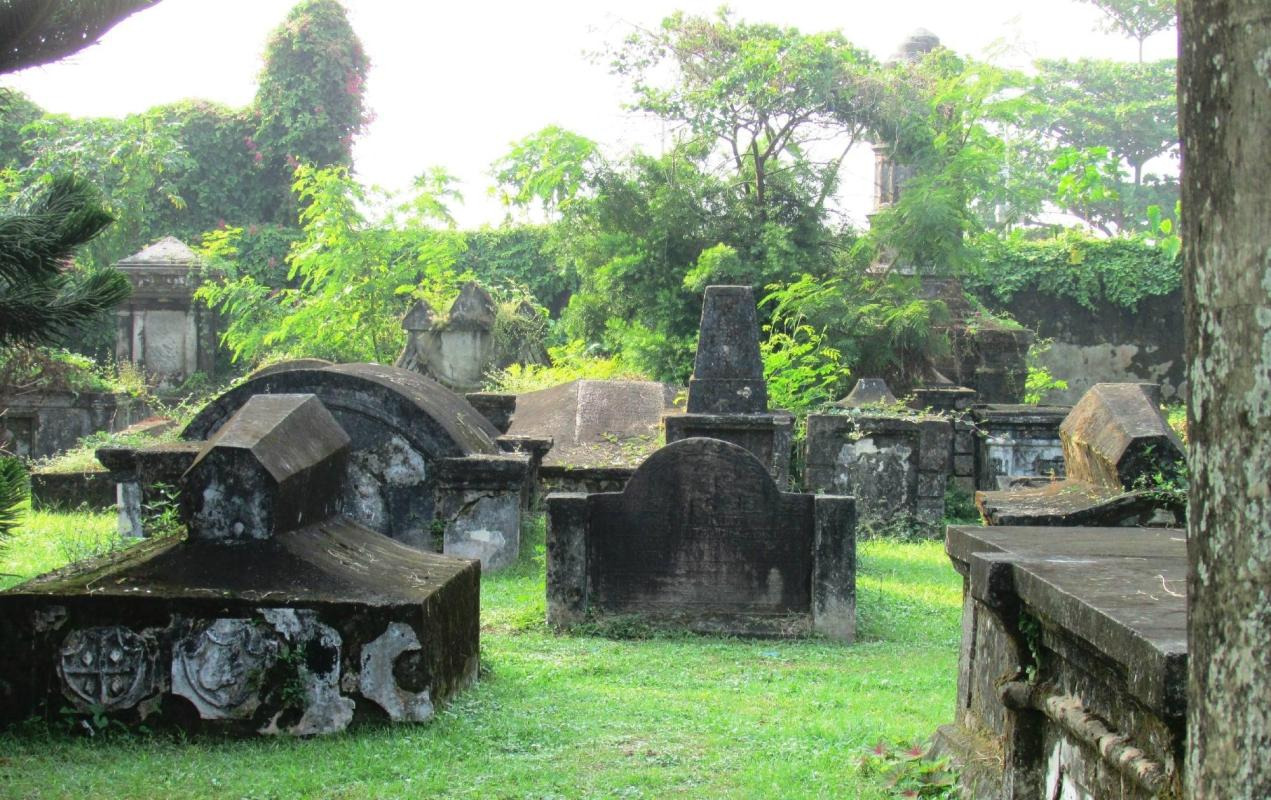
• The Dutch Cemetery is a notable historical site in Fort Kochi, known for its imperial burials from centuries past. Established in 1724, it is presently managed by the Church of South India and is steeped in stories that reflect the cultural history of the coastal region.
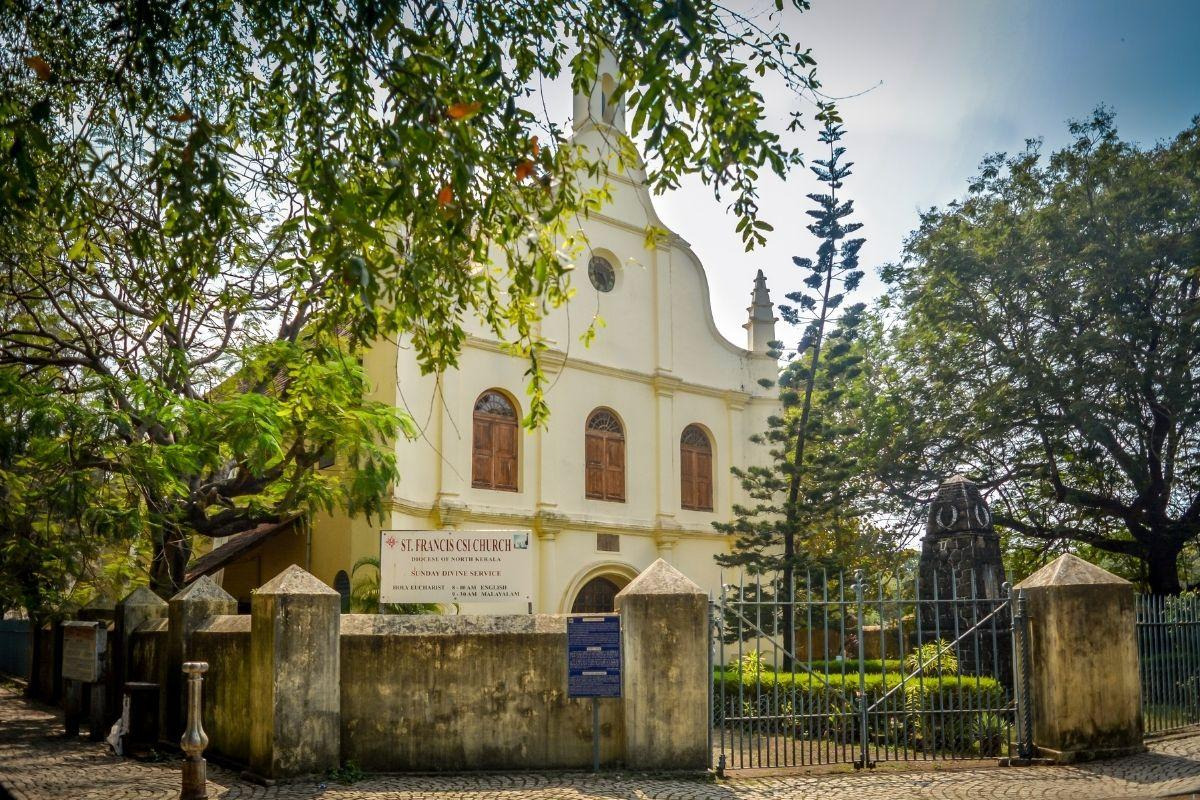
• St. Francis Church is recognized for its impressive architecture and is believed to be one of the oldest European-built churches in India. Vasco da Gama, the first Portuguese sailor to arrive in Kerala, was buried here in 1524, although his remains were returned to Portugal 14 years later. His burial site is marked within the church, attracting visitors. The church features a high structure with a gabled roof and impressive stepped pinnacles, and its interior presents a beautiful view with arches separating the chancel from the nave.
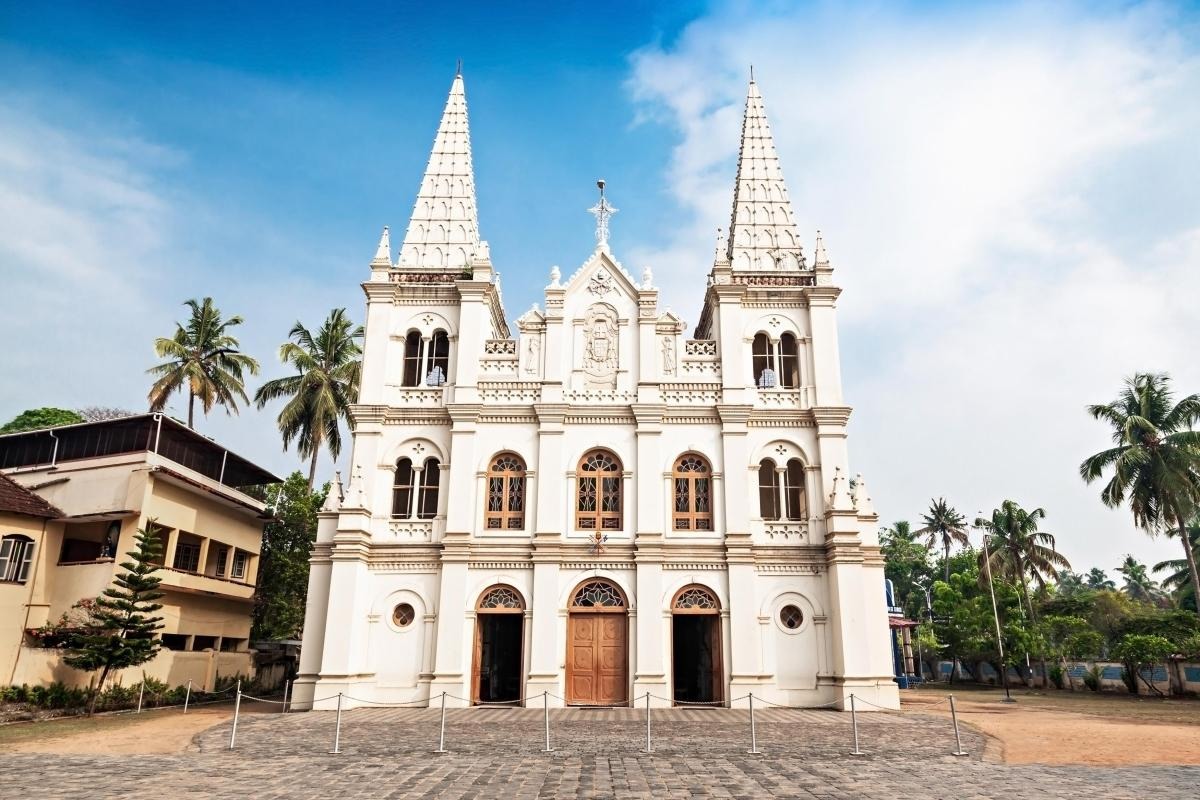
• The Santa Cruz Cathedral Basilica in Fort Kochi is one of India's eight basilicas and is celebrated for its architectural significance. Close to St. Francis Church, it serves as the cathedral for the Diocese of Cochin, India's second oldest diocese. Its history dates back to the sixteenth century, starting with Portuguese missionaries in 1500 CE. The foundation stone was laid on May 3, 1505, and the current structure was consecrated on November 19, 1905. In 1984, Pope John Paul II elevated the cathedral's status to a basilica due to its historical and artistic value.
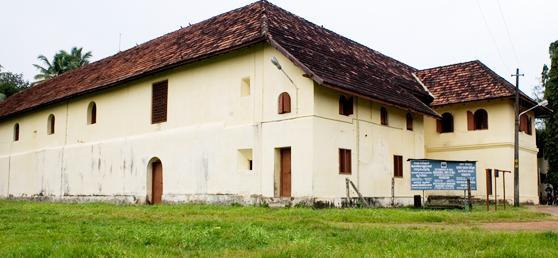
• The Mattancherry Palace, or Dutch Palace, is an excellent representation of Kerala architecture mixed with colonial styles. Constructed around 1545 CE as a gift to King Veera Kerala Verma by the Portuguese, it was later renovated by the Dutch, thus acquiring its current name. This two-story palace houses an extensive collection of murals depicting significant Indian epics like the Ramayana and Mahabharata, as well as Hindu deities. It also features exhibits that reveal the lives of the royal family, including life-size portraits of the Kings of Cochin and various royal artifacts.
• Princess Street, one of the earliest streets in Fort Kochi, maintains its historic charm through its European-style residences. Loafer’s Corner provides a picturesque view of this quaint street and serves as a popular gathering spot for locals.
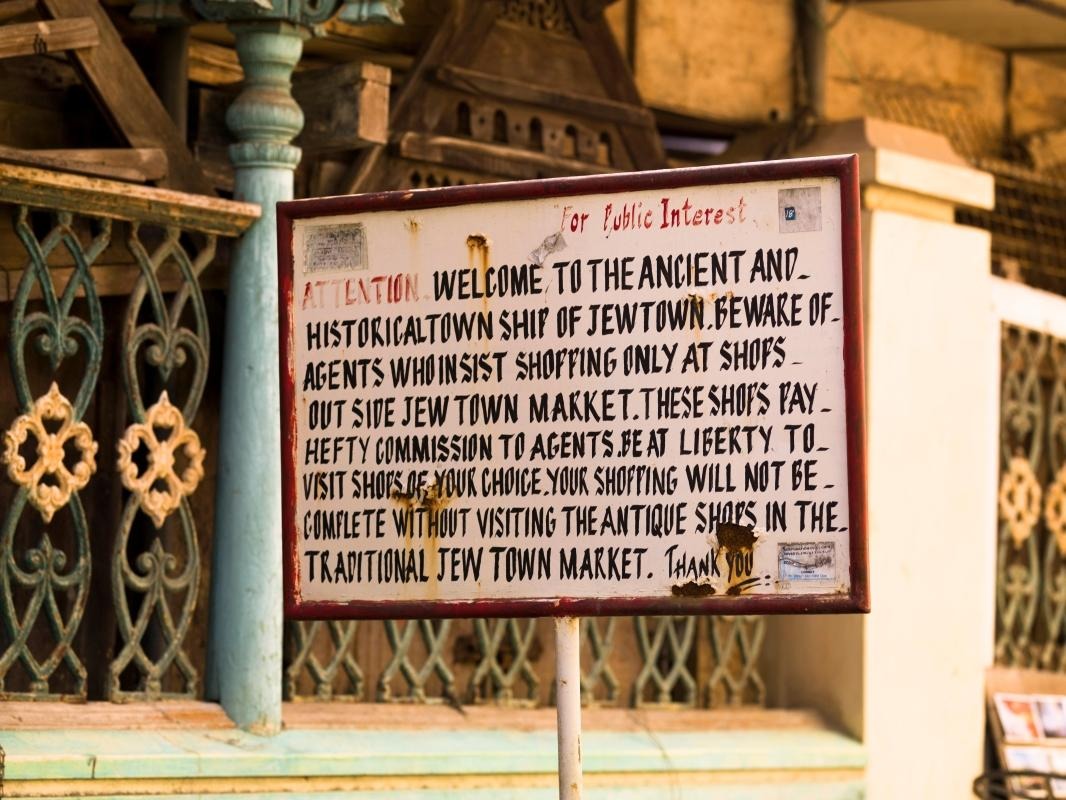
• During the Moorish Arab attacks in 1524, the Jewish community received protection from the Maharaja of Travancore and Cochin, leading to the establishment of Jew Town opposite the Maharaja's palace. This area became home to the Pardesi synagogue, built in 1568.
• The Paradesi Synagogue, located in Kochi, Kerala, is the oldest active synagogue in the Commonwealth of Nations, built in 1568. It is one of seven synagogues serving the Cochin Jewish community in the Kingdom of Cochin