What's the itinerary?+
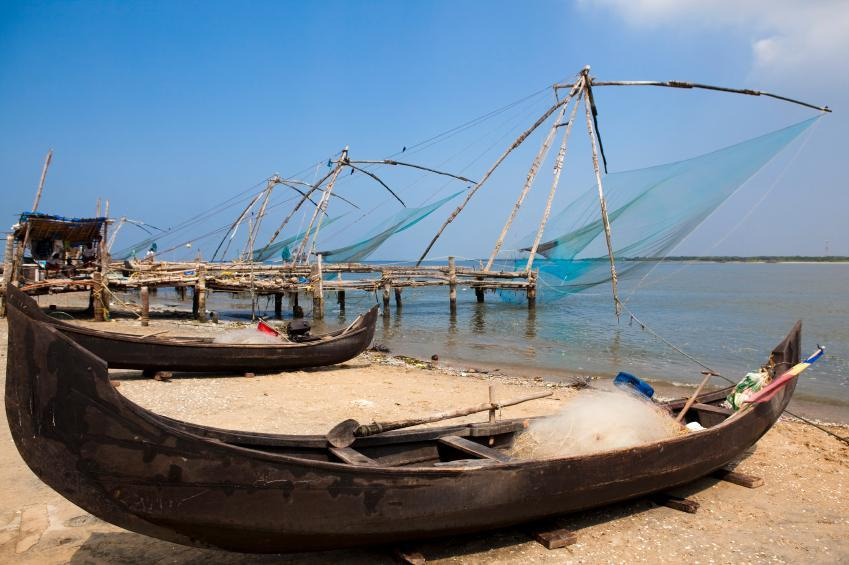
• Chinese fishing nets, known as Cheena vala, are stationary lift nets located in India. These fishing apparatuses serve as fixed installations for catching fish, characterized by large mechanical structures that hold horizontal nets extending over 20 meters across. Each installation stands at least 10 meters tall, featuring a cantilever holding an outstretched net over the sea, counterweighted by large stones suspended from ropes, operated by a team of six fishermen. Though operated in southern China and Indochina, these nets are primarily found in Kochi and Kollam, becoming a notable tourist attraction. This fishing method, introduced by Chinese explorers in the 14th century, is rare in India, with Kochi's name interpreted as ‘co-chin,’ meaning like China.
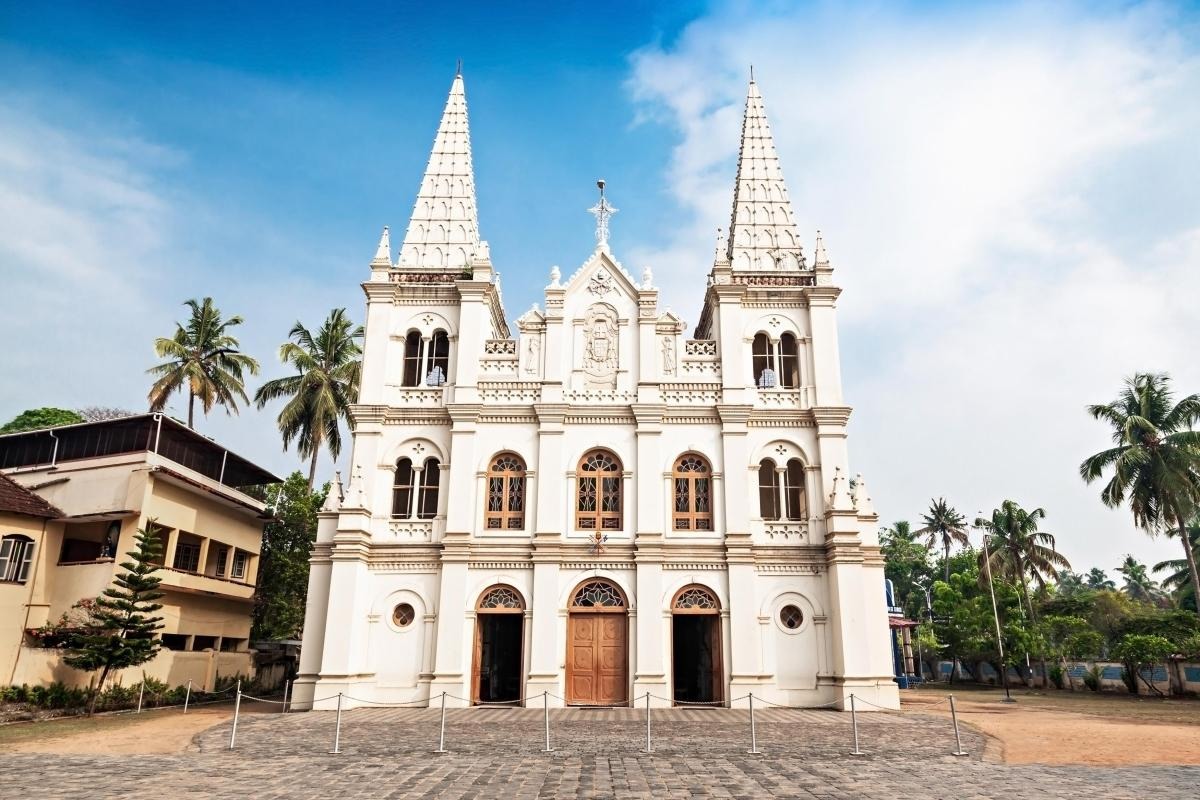
• The Santa Cruz Cathedral Basilica, located in Fort Kochi, is one of eight Basilicas in Kerala. As a noteworthy heritage structure in Kerala, it is recognized as one of the most impressive churches in India and attracts visitors year-round.
• Fort Kochi beach lies along the Arabian Sea in Fort Kochi, located in Kochi, Kerala, South India.
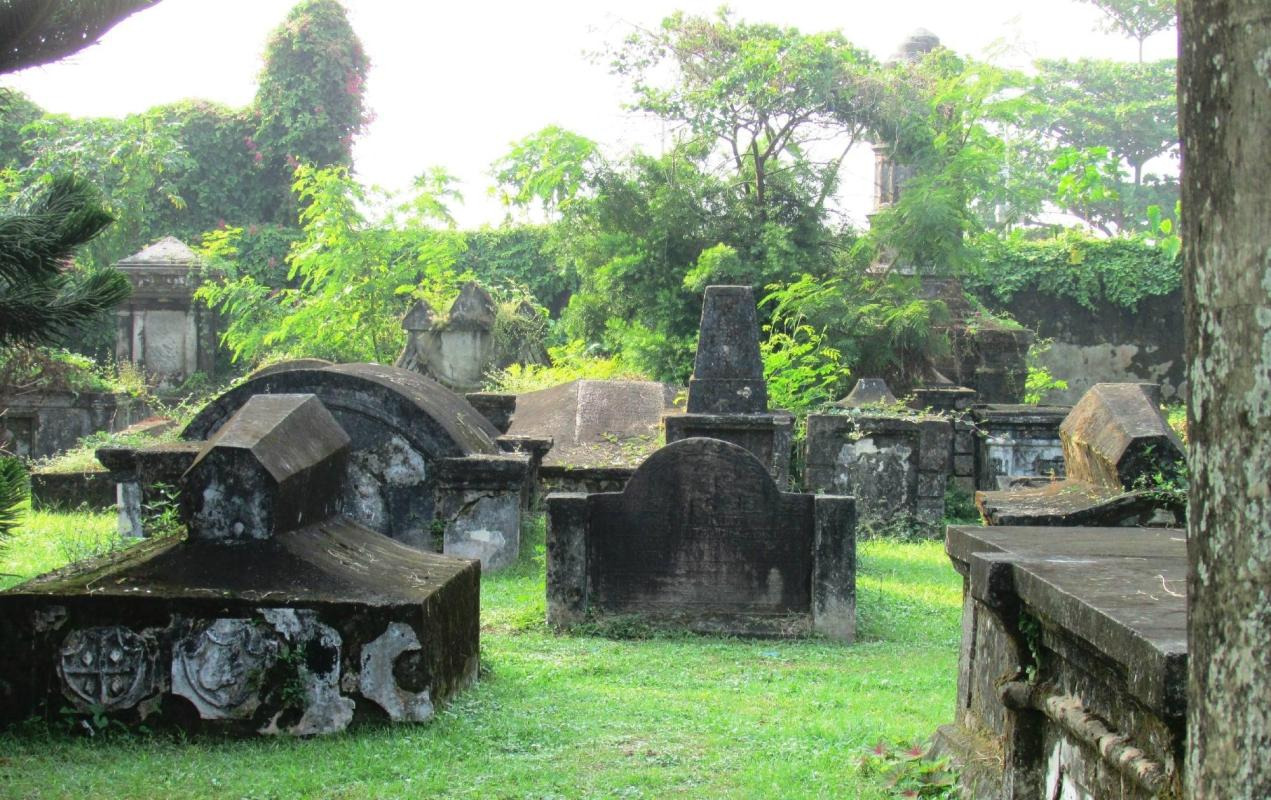
• The Dutch cemetery is a historical site in Fort Kochi, known for its imperial figures who settled there centuries ago to expand their empire. Consecrated in 1724, it is maintained by the Church of South India, hosting several intriguing stories.
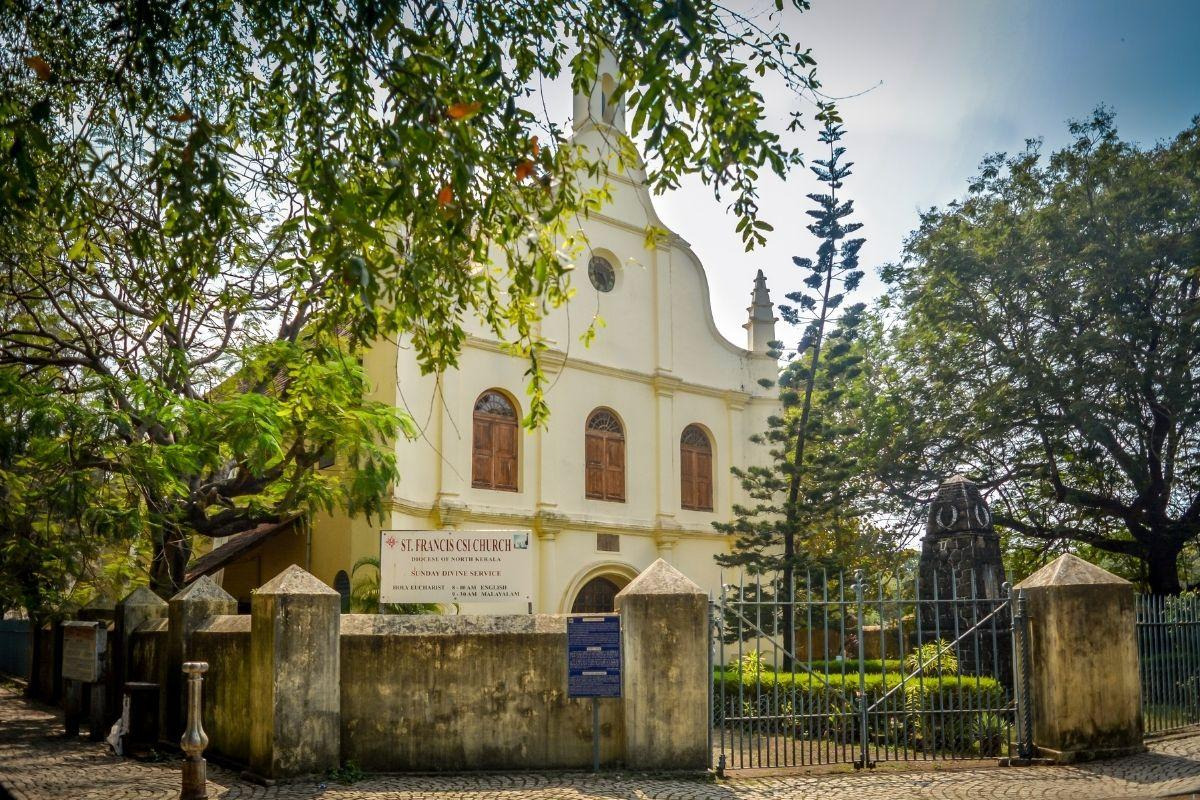
• St. Francis Church, established in 1503 in Fort Kochi, is one of the oldest European churches in India and holds significant historical value regarding the colonial history in the region. Vasco da Gama, the Portuguese explorer, died in Kochi in 1524 during his third visit to India. Initially buried in this church, his remains were moved to Lisbon fourteen years later.
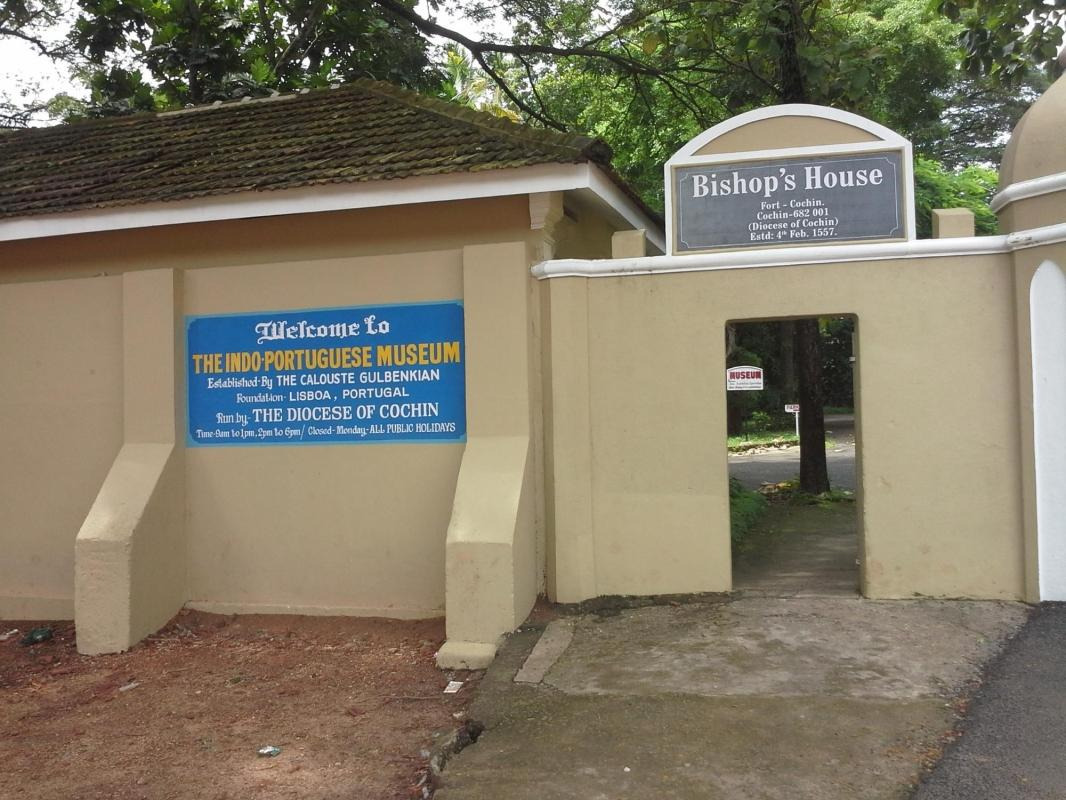
• The Indo-Portuguese Museum is situated in Fort Kochi, Kerala, India.
• The Dhobi Khana public laundry, located near Veli Ground in Fort Kochi, is due for modernization. The Vannar community, which runs the laundry, has approached the Greater Cochin Development Authority (GCDA) for help in establishing modern facilities. This service, initiated by the Vannar community from Tamil Nadu during the Dutch era, continues the traditional practice of hand-washing clothes, drying them outdoors, and ironing. Approximately 45 washermen are employed here, and efforts are made to attract younger community members to continue this traditional vocation.
• Cochin Tirumala Devaswom, also known as Gosripuram, is the principal socio-religious establishment of the Gowda Saraswat Brahmins in Kerala. Located at Cherlai in Mattancherry, one of the earliest settlements of GSBs, this temple was founded in the latter half of the 16th century, intertwining the history of GSBs with its Venkateswara idol.
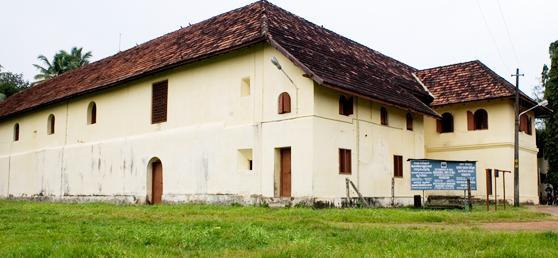
• The Mattancherry Palace, also referred to as the Dutch Palace, is a Portuguese palace in Kochi, Kerala, which displays Kerala murals depicting the Rajas of Kochi. It has been proposed for inclusion in UNESCO's tentative list of World Heritage Sites.
• The Paradesi Synagogue, constructed in 1568, is the oldest active synagogue in the Commonwealth of Nations, located in Kochi, Kerala, within South India. It is one of seven synagogues serving the Malabar Yehudan or Cochin Jewish community in the Kingdom of Cochin.
• A prominent Jain place of worship features a daily pigeon show and feeding at noon.
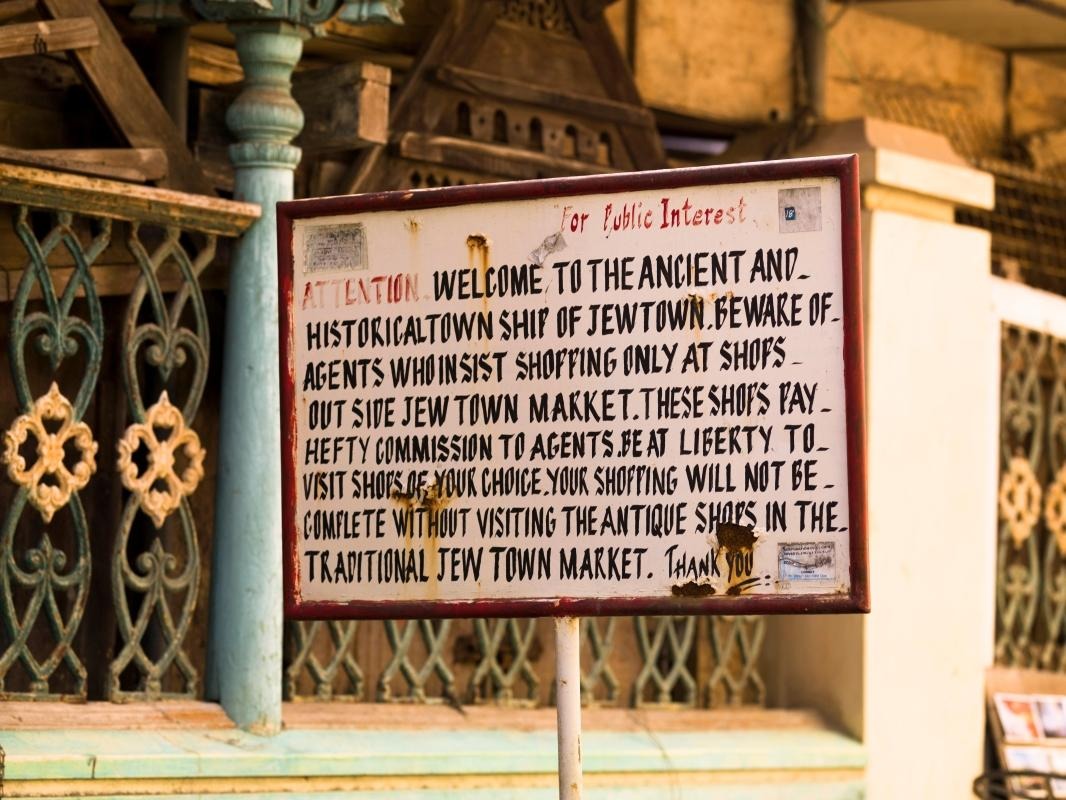
• Historic Jew Town represents the center of the former Cochin Jewish community, celebrated for its old-world appeal and the 16th-century Paradesi Synagogue. Nearby shops along Synagogue Lane and Jew Town Road offer antiques, carvings, vintage collectibles, Keralan crafts, and aromatic spices. Relaxed outdoor cafés and artistic eateries, some housed in heritage buildings, provide local and Western cuisine.
• A simple shop