
The Old City of Jerusalem is a UNESCO World Heritage site encircled by 16th-century Ottoman walls, divided into four quarters: Jewish, Christian, Muslim, and Armenian. Key landmarks include the Western Wall, the Church of the Holy Sepulchre, and the Al-Aqsa Mosque, each steeped in profound historical and religious significance. Plan to immerse yourself in the narrow, winding streets where ancient traditions meet contemporary life. Sunrise or sunset offers the most atmospheric experience, with light casting shadows on the ancient stone. Be prepared for crowds; visiting during weekdays can provide a less hectic atmosphere.

The Church of the Holy Sepulchre is a significant Christian site believed to be the location of Jesus's crucifixion, burial, and resurrection. Constructed in the 4th century by Emperor Constantine, the church features a complex of chapels and shrines, with its ornate rotunda housing the tomb of Christ at the heart. Visiting early in the morning can offer a quieter experience before mass crowds arrive. The surrounding Old City is a labyrinth of narrow streets filled with vendors, while the nearby Western Wall provides a striking contrast to the ornate interiors of the church. Look for the diverse expressions of faith as you navigate this sacred space.
- 4.6· 5,416 reviews139 tours include this

The Western Wall, also known as the Wailing Wall, is a remnant of the Second Temple complex, a sacred site for Jewish prayer and pilgrimage located in the Old City of Jerusalem. Standing at approximately 18 metres high, this ancient limestone wall has become a symbol of Jewish endurance and hope, drawing visitors from around the world who approach it with reverence. Spend time observing the diverse crowds and the rituals taking place, especially during the day, when prayers and readings occur. Nearby attractions include the Dome of the Rock and the Church of the Holy Sepulchre, both significant in their own right. Be mindful of the somber atmosphere during religious observances, which may attract larger gatherings.
- 4.5· 4,150 reviews101 tours include this

The Way of the Cross, or Via Dolorosa, is a winding route in Jerusalem traditionally believed to be the path that Jesus took on the way to his crucifixion. Starting from Pilate's judgment hall, the path features 14 Stations of the Cross, marked by chapels and shrines, each commemorating moments from the Passion narrative. A visit typically takes about an hour or more, depending on stops made for prayer or reflection. The most evocative times are early morning or late afternoon to avoid crowds. Nearby attractions include the Church of the Holy Sepulchre at the end of the route and the lively Old City markets that flank the path.
- 05
Masada
4.3· 3,002 reviews65 tours include this
Masada is an ancient fortification perched atop a towering plateau in the Judean Desert, built by King Herod in the 1st century BC. This UNESCO World Heritage Site is famed for its well-preserved ruins, including palaces, storerooms, and a bathhouse, offering insight into the lives of its former inhabitants against a dramatic desert backdrop. Visit early in the morning to avoid the midday heat and to experience stunning views at sunrise. The site can be accessed via a challenging hiking trail or a cable car. Nearby, the Dead Sea offers a unique opportunity for relaxation and exploration after your visit.
- 06
Jericho

Jericho is one of the oldest inhabited cities in the world, situated in the Jordan Valley, just north of the Dead Sea. Visitors encounter remnants of ancient fortifications and the famous Mount of Temptation, said to be where Jesus was tempted by the devil. With its rich archaeological history, Jericho has been a focal point of cultural exchange for millennia. Spending a few hours here allows for exploration of the archaeological park and the iconic Sycamore tree. The best time to visit is during the cooler months from October to April, when the weather is pleasant. The city is easily accessible from Jerusalem, making for a worthwhile day trip.
- 4.3· 3,013 reviews20 tours include this

Ein Gedi Nature Reserve is a lush oasis located along the western shore of the Dead Sea, known for its dramatic cliffs, waterfalls, and diverse wildlife. This nature reserve, with origins dating back to ancient times, features the Nahal David and Nahal Arugot streams that carve through the arid landscape, creating a striking contrast with the surrounding desert. Spend a few hours exploring the well-marked trails that lead to stunning viewpoints and serene spots for a refreshing dip. The best times to visit are in spring and autumn when temperatures are milder. Take note of the local ibex and other wildlife as you traverse the varied terrain.

The Garden of Gethsemane is an ancient olive grove located at the foot of the Mount of Olives, known primarily for its association with the last days of Jesus, as recorded in the New Testament. The garden features several gnarled olive trees, some of which are believed to be over 2,000 years old, creating a serene yet historical atmosphere for visitors. Plan to spend about an hour exploring the garden and its surroundings, including the nearby Church of All Nations which houses a striking altar. The best time to visit is during early morning or late afternoon when the light softens and the crowds are thinner, allowing for quiet reflection in this significant historical site.
- 4.6· 35 reviews4 tours include this

The Western Wall Tunnels extend along the western side of the Temple Mount, revealing the extensive foundation of the Second Temple built in the 1st century BCE by Herod the Great. Visitors enter through the heavily ornamented Western Wall Plaza, where they can observe large stones and intricate arches that testify to ancient engineering. Exploring the tunnels takes about an hour, revealing several archaeological finds, including ritual baths and a large stone believed to be part of the original wall. The site is often quieter in the morning, making it a more contemplative experience. Look out for the intricate masonry and the dynamic tour guides who add depth to the history.
- 4.9· 1,536 reviews45 tours include this

Temple Mount, known as al-Haram al-Sharif, is a historically significant religious site in Jerusalem, revered by Jews, Muslims, and Christians alike. It is home to the stunning Dome of the Rock, an octagonal Islamic shrine completed in the 7th century, and the Al-Aqsa Mosque, which dates back to the same period and is one of the oldest mosques in the world. Expect to navigate security checks upon entry, and be mindful of the varying customs observed by worshippers at the site. Early morning is ideal for a visit, providing a quieter atmosphere to take in the intricate mosaics and the serene ambiance, especially as the sun rises over this sacred ground. The Western Wall lies just to the west, offering a different perspective on the complex interweaving of faiths here.

The Jerusalem Jewish Quarter is a historic district within the Old City, featuring a blend of ancient architecture and modern life. Established during the early medieval period, its narrow alleys are lined with synagogues, shops, and homes, showcasing centuries of Jewish heritage. Key landmarks include the Cardo, an ancient Roman road, and the Hurva Synagogue, a symbol of restoration. Wandering through the Quarter takes you past engaging cultural sites, such as the Biblical Zoo nearby and the Western Wall just a short walk away. Aim for early morning or late afternoon to avoid crowds and capture the light filtering through the ancient stones. Pay attention to the local atmosphere, which shifts with the time of day.
- 4.8· 277 reviews12 tours include this

The City of David National Park is an archaeological site that traces the history of Jerusalem back to its origins, with remains dating from the Bronze Age to the Byzantine period. Visitors can explore ancient water systems, the impressive Stepped Stone Structure, and the remnants of the First Temple, all while walking through this significant historical landscape. Plan a few hours for a thorough exploration, ideally starting early in the day to avoid the heat. The nearby Tunnel of Hezekiah offers a fascinating experience of the ancient water system, and the park is a short walk from the vibrant streets of the Old City, where the history continues.
- 4.5· 4,159 reviews51 tours include this

The Christian Quarter is one of the four quarters of Jerusalem's Old City, encompassing significant religious sites such as the Church of the Holy Sepulchre, believed to be the site of Jesus' crucifixion and resurrection. The quarter is a maze of narrow lanes filled with shops, cafes, and ancient architecture, reflecting centuries of Christian history. A visit here is best during the early morning or late afternoon when the crowds are thinner and the light enhances the stone facades. Don't miss the nearby Via Dolorosa, which traces the path Jesus took on his way to crucifixion, providing a deeper context to the area’s significance.
- 4.3· 2,786 reviews28 tours include this

Kidron Valley is an ancient ravine located to the east of Jerusalem, stretching from the Old City to the Dead Sea. Historically significant, it has served as a burial ground since biblical times, with notable sites including the tombs of Absalom and Zechariah, marked by their distinct rock-cut facades. Exploring the valley provides a glimpse into Jerusalem's past, particularly relevant for those interested in religious history. Early morning or late afternoon visits allow for a cooler experience, and the surrounding hills offer a beautiful backdrop. Be mindful of the steep paths, especially if you're venturing to see the nearby Mount of Olives.
- 4.6· 847 reviews37 tours include this

The Mount of Olives is a prominent ridge located east of Jerusalem's Old City, with an elevation of about 818 metres. This site is steeped in religious significance, traditionally associated with many biblical events, offering panoramic views of the city, including the iconic Dome of the Rock and the Western Wall. Visitors can explore several key sites such as the Church of All Nations and the ancient Jewish cemetery. The best time to visit is early morning or late afternoon, avoiding the heat of midday. The area is rich in history, making the tranquil scenery a reflective backdrop for a walk.

The Church of All Nations, also known as the Basilica of the Agony, is a stunning structure located at the foot of the Mount of Olives, built between 1919 and 1924. Its design incorporates elements of Byzantine architecture, with an impressive façade of stone and dramatic stained-glass windows that filter light into the interior, where visitors can see the Agony of Jesus portrayed in mosaics. Plan to spend some time in quiet reflection, especially at the olive trees in the adjacent garden, which date back to antiquity. The church tends to attract crowds during major religious events, making early morning visits ideal for a more tranquil experience. Nearby, the Mount of Olives offers sweeping views of the Old City.
- 4.5· 848 reviews16 tours include this

The Dome of the Rock is an octagonal shrine marked by its striking golden dome, built in the late 7th century at the heart of Jerusalem's Old City. It stands on the Temple Mount, a site sacred to both Muslims and Jews, featuring intricate mosaics and calligraphy that recount the significance of the location. Visitors can appreciate the building's stunning architecture from the outside, as entry is restricted to Muslims. The best time to visit is early morning or late afternoon when the light casts soft shadows on the façade. Nearby attractions include the Western Wall and Al-Aqsa Mosque, both emblematic of the city's rich religious history.

The Room of the Last Supper, or Cenacle, is a thirteenth-century Gothic structure atop Mount Zion, believed to be the site where Jesus shared his final meal with the Apostles. The room's high vaulted ceiling and stone walls radiate a solemn yet historic ambiance, enhanced by its significance to Christianity as a focal point of devotion. Visiting the Cenacle offers an opportunity to reflect on its layered history and religious importance. Adjacent to the site are other notable attractions, including the Tomb of David and the Church of St. Peter in Gallicantu. The cooler months can be particularly pleasant for a visit, with less foot traffic allowing for quieter contemplation.
- 4.6· 174 reviews22 tours include this

Mahane Yehuda Market, commonly known as The Shuk, is a bustling market in Jerusalem famed for its vibrant array of fresh produce, spices, and local delicacies. Established in the late 19th century, it features narrow alleyways lined with stalls, cafes, and shops, all under a canopy of streaming lights that give it a lively atmosphere, especially in the evenings. Plan to spend a couple of hours exploring the stalls and sampling street food like halva and sabich. Weekends draw large crowds, making Friday mornings an ideal time for a more relaxed experience. Nearby, the picturesque Nachlaot neighborhood offers charming streets and additional culinary delights.

Al-Aqsa Mosque is one of the holiest sites in Islam, an expansive complex occupying the Temple Mount in Jerusalem. The mosque is an architectural marvel with elements dating back to the 8th century, showcasing stunning mosaics and intricate marble work. The golden Dome of the Rock nearby adds to its significance and beauty. Visiting requires thoughtful planning due to the site's religious importance and security regulations. Arrive early to appreciate the serene atmosphere before the crowds. The adjacent Western Wall offers a contrasting perspective on the deep historical and cultural connections in this vibrant part of the city.

King David's Tomb is located on Mount Zion and is considered a significant site for Jews, Christians, and Muslims, believed to house the burial place of the biblical king. The structure features a large, ornate cenotaph adorned with tapestries and an adjoining synagogue, with pilgrims paying their respects in this revered space. Visitors often explore the nearby Room of the Last Supper and the Dormition Abbey, adding layers of historical context to their experience. Early morning or late afternoon offers a quieter visit, with the area’s spiritual ambience enhanced by the gentle sounds of prayer and contemplation echoing through the halls.
- 22
Cardo
4.5· 1,278 reviews33 tours include this
The Cardo is an ancient Roman road that runs through the heart of Jerusalem's Old City, constructed in the 2nd century CE as a central thoroughfare of trade and commerce. Visitors will find remnants of its stone columns and intricate mosaics, with sections stretching alongside the modern-day Jewish Quarter and the recently restored Byzantine marketplace. Exploring the Cardo offers a glimpse into the city's layered history and the blend of ancient and contemporary life. It’s best visited in the cooler morning hours to avoid the crowds, and the nearby Western Wall and the bustling alleys of the Old City make for compelling adjacent stops. Look for the faint outlines of the past beneath your feet.
- 4.7· 236 reviews13 tours include this

The Pool of Bethesda is an archaeological site in Jerusalem, associated with healing rituals dating back to antiquity. This dual pool system, surrounded by five porticos, is believed to have been constructed during the Roman period, with significant attention paid to the remains of Byzantine additions that followed. The site is steeped in biblical history, often linked to the Gospel of John. Visiting the Pool offers a contemplative atmosphere, especially during quieter hours of the day when the sun reflects off the ancient stones. The nearby Church of St. Anne provides additional context, while the bustling streets of the Old City lend a sense of immediacy to the experience of this historic site. Look for the archaeological remains that provide insights into the ancient city's layout.
- 4.8· 836 reviews32 tours include this

The Armenian Quarter is one of the four traditional quarters of Jerusalem, established since the 7th century and representing the small Armenian community that has resided here for centuries. Visitors walk through its narrow, winding streets, often shaded by quaint buildings adorned with religious symbols and vibrant murals that reflect the rich cultural heritage of the Armenians. Spend time at the St. James Cathedral, which houses impressive artworks and relics. A leisurely stroll will reveal artisan shops selling crafts and prayer beads. The quarter is less crowded than others, making it particularly pleasant in the early morning or late afternoon when sunlight creates a warm glow on the ancient stone walls.
- 4.7· 184 reviews9 tours include this

The Church of St. Anne is a Romanesque structure built in the 12th century, situated near the Pools of Bethesda in Jerusalem's Old City. It is traditionally recognized as the birthplace of the Virgin Mary and features stunning acoustics attributed to its high vaulted ceilings and minimalist design, allowing for an atmosphere of serene contemplation. Visit for its remarkable architecture and to appreciate the tranquil gardens that surround the church. The site is often less crowded than nearby attractions, making it a perfect respite. Nearby, the ruins of the Byzantine church and the adjacent Pool of Bethesda are worth exploring for their historical significance.
- 5.0· 62 reviews12 tours include this

The Tower of David is an ancient citadel located near the Jaffa Gate, known for its imposing stone walls and rich history that spans over 3,000 years. Originally built by Herod the Great, the structure has served various purposes, from a fortress to a royal palace, and now houses the Museum of the History of Jerusalem, showcasing artifacts and exhibits that tell the city's complex story. Allocate at least two hours for a visit, with additional time if you wish to ascend the tower for panoramic views of Jerusalem. The nearby Old City offers a wealth of historical sites, including the Western Wall and the Church of the Holy Sepulchre, all within walking distance and best explored early in the morning to avoid crowds.
- 4.8· 974 reviews41 tours include this

Jaffa Gate, known as Bab al-Khalil in Arabic, is one of the main entrances to the Old City of Jerusalem, dating back to the 16th century and designed by the Ottoman architect Suleiman the Magnificent. The gate is notable for its impressive stone archway and robust defensive towers, standing as a significant historical landmark that leads directly into the bustling marketplace and historic quarter. Approaching Jaffa Gate offers a glimpse of the Old City’s layered history, with the Tower of David nearby and the Armenian Quarter to the right. Visit early in the morning to avoid crowds and feel the ancient energy, but keep an eye on your belongings in the busy markets just beyond the gate.

The Chapel of the Ascension stands on the Mount of Olives, marking the traditional site where Jesus is said to have ascended to heaven. This small, octagonal structure, built in the 12th century, is an important pilgrimage destination, with a serene interior that features ancient mosaics and a stone that is believed to bear the imprint of Christ's foot. Visiting the chapel offers a moment of reflection amidst the larger context of the Mount of Olives, which includes the nearby Church of All Nations and the Garden of Gethsemane. Mornings tend to be quieter, providing a more peaceful experience before the midday rush of tourists. The chapel's atmosphere, combined with the city view, offers a unique perspective on a pivotal religious landmark.
- 5.0· 8 reviews2 tours include this

Hezekiah's Tunnel, also known as the Siloam Tunnel, is an ancient water conduit carved over 2,700 years ago during the reign of King Hezekiah. This 533-metre-long tunnel was constructed to secure a water source within the city walls during impending Assyrian siege, providing access from the Gihon Spring to the Pool of Siloam. Visiting the tunnel offers a unique glimpse into Jerusalem's engineering marvels and ancient history, with walls chiseled from rock. The experience is best in the cooler months to avoid the heat while wading through the shallow water. Nearby, the City of David archaeological site enhances the historical context, making it worth exploring further.

Yad Vashem is Israel's official memorial to the victims of the Holocaust, established in 1953. The extensive complex includes a museum, a research center, and a memorial to the righteous among the nations, set against the stunning backdrop of the Jerusalem hills. Visitors encounter poignant exhibits and a series of memorials dedicated to different aspects of the Holocaust experience. Plan for at least two to three hours to engage with the depth of the exhibits, ideally visiting in the morning for a quieter experience. Nearby, the Mount Herzl cemetery and the Israel Museum offer additional insights into the nation’s history and culture. The reflective atmosphere is heightened on quiet days.

Mount of Olives Cemetery is one of the oldest and most sacred graveyards in the world, with an estimated 150,000 graves dating back to ancient times. Located on the eastern slope of the Mount of Olives, it provides a striking view of the Old City of Jerusalem, particularly the iconic golden Dome of the Rock. Visiting this site allows for quiet reflection amid the many distinct mausoleums and tombs, including that of the renowned Jewish philosopher Maimonides. Early mornings or late afternoons offer the best lighting for photography and a more serene atmosphere, while the nearby Church of All Nations adds to the area's historical significance.

The Tomb of the Virgin Mary, located at the foot of the Mount of Olives, is an ancient site believed by many to be the burial place of Mary, the mother of Jesus. This seventh-century basilica, constructed by the Byzantine Empire, encompasses a crypt where visitors can view a stone sarcophagus, surrounded by ornate mosaics and religious iconography. A visit here typically takes about an hour, allowing time for reflection and exploration. The site can be quiet in the morning, offering a serene atmosphere for contemplation. Nearby attractions include the Church of All Nations and the Garden of Gethsemane, both adding to the area's spiritual significance.
- 4.7· 47 reviews12 tours include this

The Israel Museum in Jerusalem is the country's largest cultural institution, showcasing art and archaeology across an impressive 20-acre complex. Opened in 1965, it houses the Dead Sea Scrolls in the Shrine of the Book, and features a vast collection of Jewish artifacts, ancient relics, and contemporary art spanning various periods. Plan at least three hours to explore the diverse exhibits, including the outdoor sculpture gardens. The museum is a short distance from the vibrant Mahane Yehuda Market, making it easy to combine a visit with a stroll through one of Jerusalem's most lively areas. Early mornings or late afternoons are ideal for quieter exploration.

Zion Gate, or Bab an-Nawi Dawud, is a 16th-century entrance to Jerusalem's Old City. Built during the Ottoman period, its imposing structure features a mix of Renaissance and Islamic architectural styles, with intricate stone carvings and a distinctive archway. The gate sits within the walls of the Old City, which were constructed under Suleiman the Magnificent. Visiting Zion Gate provides a direct view of the Armenian Quarter, and nearby attractions include the Mount Zion and the Dormition Abbey. Early mornings are ideal for exploring this area, as the light enhances the stone’s colours and the crowd is less dense at this hour. Be mindful of the residential nature of the surroundings as you approach.

Dominus Flevit Church is a striking structure built in the 20th century on the Mount of Olives, designed to resemble a teardrop. The church commemorates the spot where, according to tradition, Jesus wept over the city of Jerusalem. Its curved roof and modern stained glass windows offer views of the Old City through framed openings. Visitors often come for the serene atmosphere and the panoramic vistas of Jerusalem's skyline. The best times are early morning or late afternoon to enjoy the light and avoid the heat. Nearby, the Garden of Gethsemane and the Tomb of the Virgin Mary are worth a visit, enriching the historical context of the area.
- 3.9· 21 reviews3 tours include this

Mea Shearim is one of the oldest ultra-Orthodox neighbourhoods in Jerusalem, established in the late 19th century. Its narrow streets are lined with traditional stone houses and synagogues, where the community’s strictly observed customs permeate daily life. Visitors notice the distinctive attire of the residents, which often includes black hats and long coats, signalling their commitment to heritage. A walk through the area offers an insight into the unique culture of this close-knit community. Early morning is an ideal time to observe daily rituals, while the quieter afternoons can be a time for exploration. The nearby neighborhood of Geula provides additional context with its bustling shopping streets filled with kosher shops and eateries.
- 4.3· 3 reviews2 tours include this

Damascus Gate, or Bab al-Amud, is one of the most ornate of Jerusalem's ancient gates, dating back to the 16th century Ottoman period. Its imposing façade features a blend of Crusader and Islamic architectural styles, with intricate stone carvings and a large arch that welcomes visitors to the bustling Old City. Entering through the gate immerses you in the vibrant marketplace filled with shops and local merchants. The nearby Arab Quarter, steeped in history and culture, is worth a stroll. Early morning or late afternoon visits allow for a more relaxed experience, as crowds can be intense at peak hours.

Underground Jerusalem is a complex network of tunnels and chambers that reflect the city's layered history from ancient times through the Byzantine and Crusader periods. Visitors can explore these subterranean spaces, including the Western Wall tunnels, where they can see massive ancient stones interspersed with archaeological remnants that illuminate the city’s long and tumultuous past. Allocate at least two hours to wander through various sites, each offering a different perspective on Jerusalem's history. The area around the Old City serves as a convenient starting point, with nearby attractions such as the Western Wall and the bustling streets of the Old City, enhancing the overall experience.
- Free entry

The Church of St. James is an ancient structure located in the Armenian Quarter of Jerusalem, believed to date back to the 12th century. It serves as the primary worship site for the Armenian Apostolic Church and is known for its distinctive architecture featuring intricate stone carvings and a serene courtyard that reflects the long-standing history of the Armenian community in the city. Visitors can explore the beautiful interior, which contains ancient frescoes and an impressive altar. It's advisable to visit during the quieter morning hours to appreciate the peaceful atmosphere. Nearby, the Tower of David and the bustling markets of the Old City are worth a stroll if time allows.
Best activities to do in Jerusalem
Explore all (29) → 1.5 hours
Self-guided tour of Machne Yehuda Market with Chef Tali Fridman
 3 days
Three-day tour of Aqaba, Petra and Wadi Rum from Jerusalem
 2 hours
Culinary tour of Mahane Yehuda Market in Jerusalem

Bethlehem, Jericho, and Qaser Al Yahud guided tour from Jerusalem

Biblical sites tour of Jerusalem

Self-guided tour of Jerusalem's Old City

Self-guided walking tour of Jerusalem's Old City
 10 hours
Gaza border and Nova Festival memorial small group tour
Cultural & heritage in Jerusalem
See all 12 →2 hoursCulinary tour of Mahane Yehuda Market in Jerusalem
Bethlehem, Jericho, and Qaser Al Yahud guided tour from Jerusalem
Self-guided walking tour of Jerusalem's Old City
10 hoursGaza border and Nova Festival memorial small group tour

Private walking tour of Jerusalem with a local guide
 4 hours
Guided walking tour of Jerusalem's Old City
Day trips in Jerusalem
See all 11 →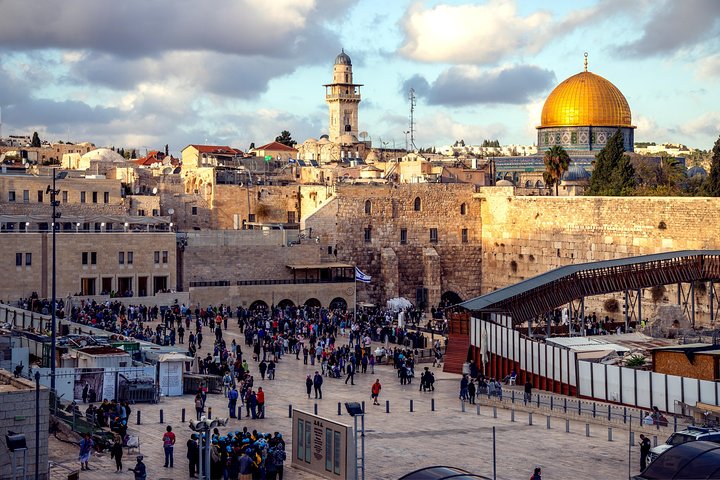 10 hours
Full-day tour of Jerusalem's Old City and Mahane Yehuda Market
 10 hours
Masada and Dead Sea day tour from Jerusalem
 12 hours
Nazareth and Sea of Galilee day trip from Jerusalem
 7 hours
Half-day tour of Jerusalem's Holy Sepulchre and Western Wall
 9 hours
Masada and Dead Sea day trip from Jerusalem
 9 hours


