What's the itinerary?+
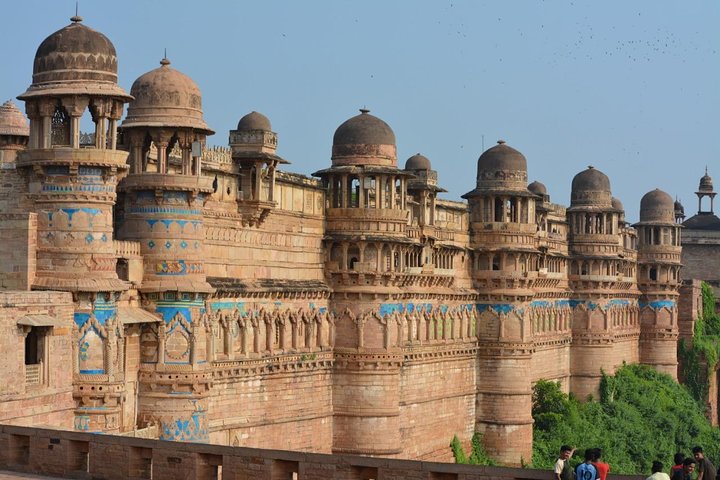
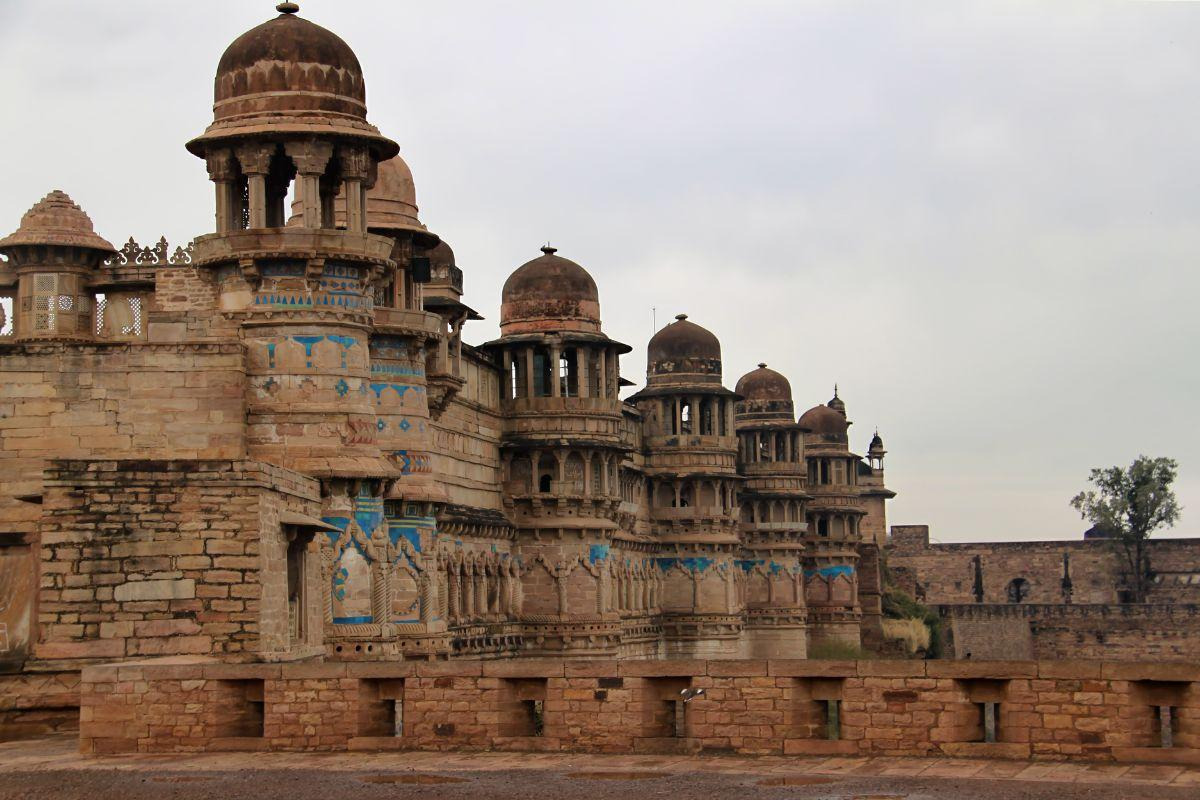
• The Gwalior Fort, an architectural marvel from the 8th century, stands on a hilltop. Its defensive structures include two main palaces, temples, and water tanks. The notable ones are the Teli-Ka-Mandir and Man Singh Palace, with the former featuring a Dravidian style shrine and praised sculptured exteriors, while the latter, built by King Man Singh in the 15th century, showcases blue ceramic tiles and reflects the Tomar dynasty's characteristics. The Gwalior Fort complex also contains the Gujari Mahal, constructed by Raja Man Singh for his queen Mrignayani, along with other significant structures like the Karan Palace, Jahangir Mahal, and Shahjahan Mahal.
• Gujari Mahal Archaeological Museum, Gwalior Fort, Gwalior India
This palace was created in the 15th century by Raja Mansingh Tomar for his queen Mrignayani. According to tradition, after having no heirs with his eight queens, he married Mrignayani, of whom he constructed Gujari Mahal to ensure she had a constant water supply. The palace now houses an archaeological museum featuring numerous Hindu and Jain sculptures, artifacts from the 1st and 2nd century B.C., replicas of Bagh cave frescoes, and terracotta items. The miniature statue of Salbhanjika is available for viewing upon request from the museum’s curator.
• Teli Ka Mandir, Gwalior Fort, Gwalior India
Teli Ka Mandir, situated within the Gwalior Fort, is a 9th-century structure and stands as the tallest building in Gwalior at 100 feet. Its distinctive architecture features a Dravidian-style roof (Shikhara) complemented by Indo-Aryan embellishments. The decor follows the Nagara style, well-known in Northern India, adorned with figures of river goddesses, serpents, couples, and a flying Garuda, the mount of Lord Vishnu.
• Karan & Jahangir Mahal are next to visit. The Karan Mahal, another important structure at Gwalior Fort, was built by Kirti Singh, the second king of the Tomar dynasty, also known as Karan Singh, which is the source of its name.
• Surajkund translates directly to ‘Lake of the Sun’. Located in Gwalior Fort, Surajkund is believed to possess healing properties, with its water reputed to treat chronic ailments. The area around Surajkund is well-maintained and inviting for tourists, especially during sunrise and sunset, enhancing its historical appeal. Legend mentions that Suraj Sen, the founder of Gwalior city, was cured of leprosy after drinking from this pond.
• Gurudwara Data Bandi Chhod is a memorial dedicated to Guru Hargobind Sahib, the 6th Sikh Guru, who was imprisoned here for over two years by Jehangir. Upon his release, he also sought the freedom of 52 Hindu kings who were fellow prisoners.
Constructed in 1970 within Gwalior Fort, this Gurudwara features marble construction and colorful stained glass. It is an important Sikh pilgrimage site, attracting numerous visitors annually. Jehangir decreed that anyone holding the Guru's robe would be freed, leading to the Guru being titled Data Bandi Chhod. The Gurudwara complex encompasses six acres, which includes the Scindia School and Guru ka Langar with a large dining hall and accommodation for staff.