What's the itinerary?+
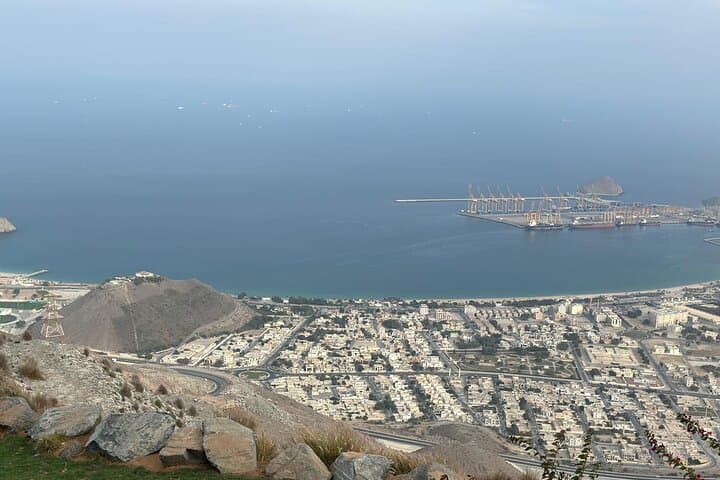
• Khor Fakkan Waterfall is an impressive man-made feature located on the rock face above Khor Fakkan Corniche in Sharjah by the Gulf of Oman. It was constructed in 2020 and opened by the Ruler of Sharjah, harmonizing engineering with the rugged landscape of the Hajar Mountains.
• Al Suhub Rest House, also known as the Cloud Lounge, is a mountain-top stop situated roughly 580–600 m above sea level in the Khorfakkan mountain range in Sharjah. This unique circular building, with a diameter of 30 m, provides 360° panoramic views of the adjoining sea and mountains. The structure spans two levels encompassing 2,788 m², featuring a restaurant and café on the ground floor (indoor seating for around 88 guests, outdoor seating for approximately 48) and a basement with multipurpose spaces, prayer facilities, restrooms, and service areas. The entire complex covers about 10,250 m², enhanced by extensive landscaping that includes around 8,700 trees.
• The fort was originally constructed in the 16th century (circa 1500–1550), as indicated by radiocarbon dating. Throughout its history, it served various roles including as a defensive position, ruler’s court, prison, and even as a site for fermenting date syrup. It was occupied by the Wahhabists from 1808 to 1810. In 1925, British naval forces bombarded the fort, destroying three towers during anti-slavery operations, leading to its abandonment until restoration efforts began.
• The museum features multiple galleries organized into Heritage and Antiquities sections:
Heritage Halls:
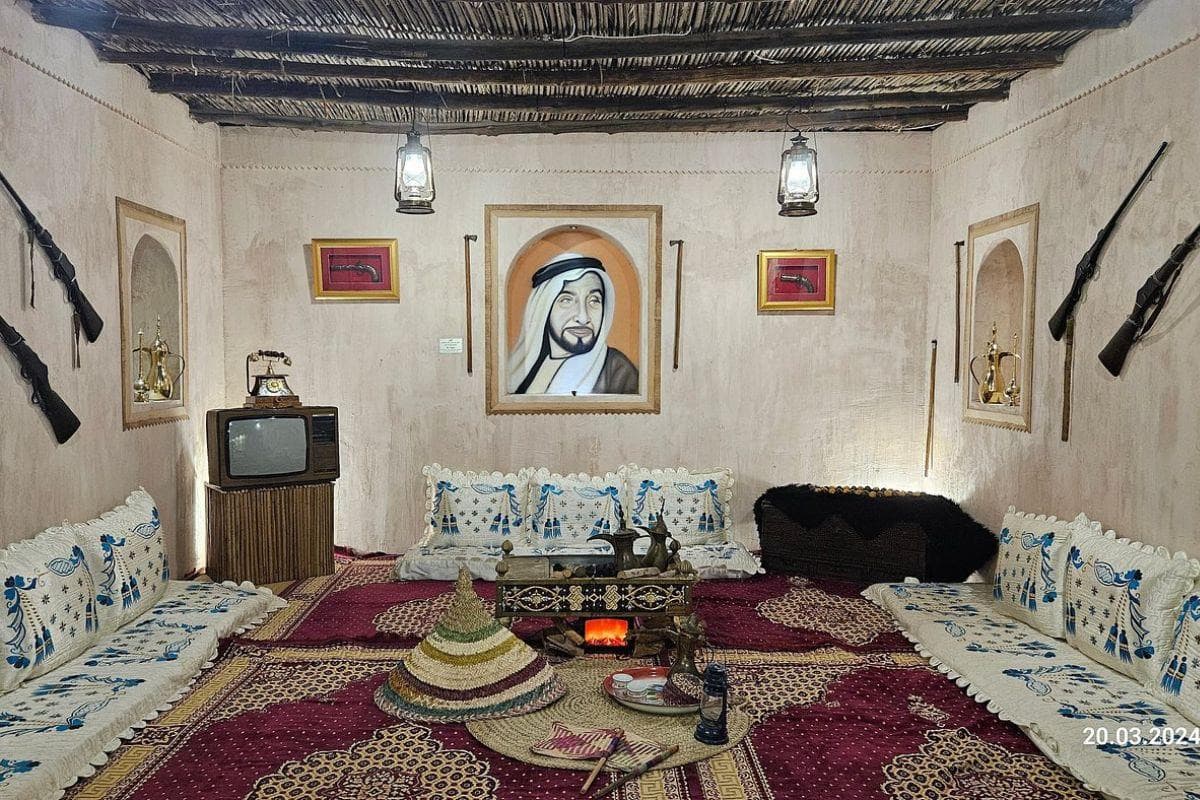
- Showcases traditional occupations such as agriculture, fishing, weaving, trade, and pottery, along with weapons, costumes, and household items.
- Displays a model of a traditional house constructed from palm leaves and showcases a spice shop/souq.
Antiquities Halls:
- Exhibits artifacts from archaeological sites like Al Badiyah and Dibba.
- Includes items such as arrowheads, pottery, beads (such as carnelian), tools, and jewelry.
- One notable artifact is an ostrich egg estimated to be around 2,500 years old.
• Traditional Handicrafts:
- Offers clay pots, carpets, woven baskets, and various traditional Emirati goods suitable for souvenirs or home decoration.
- Carpets & Furniture:
- Features Persian-style rugs and handcrafted wooden furniture, making it a favorable spot to negotiate for distinctive items.
- Local Snacks & Grilled Corn:
- Freshly grilled corn on the cob and popular local snacks are available as you explore the area.
- Scenic Mountain Drive:
- The market is set against the backdrop of the Hajar Mountains, providing a picturesque location when traveling to or from Fujairah, Khor Fakkan, or Dibba.
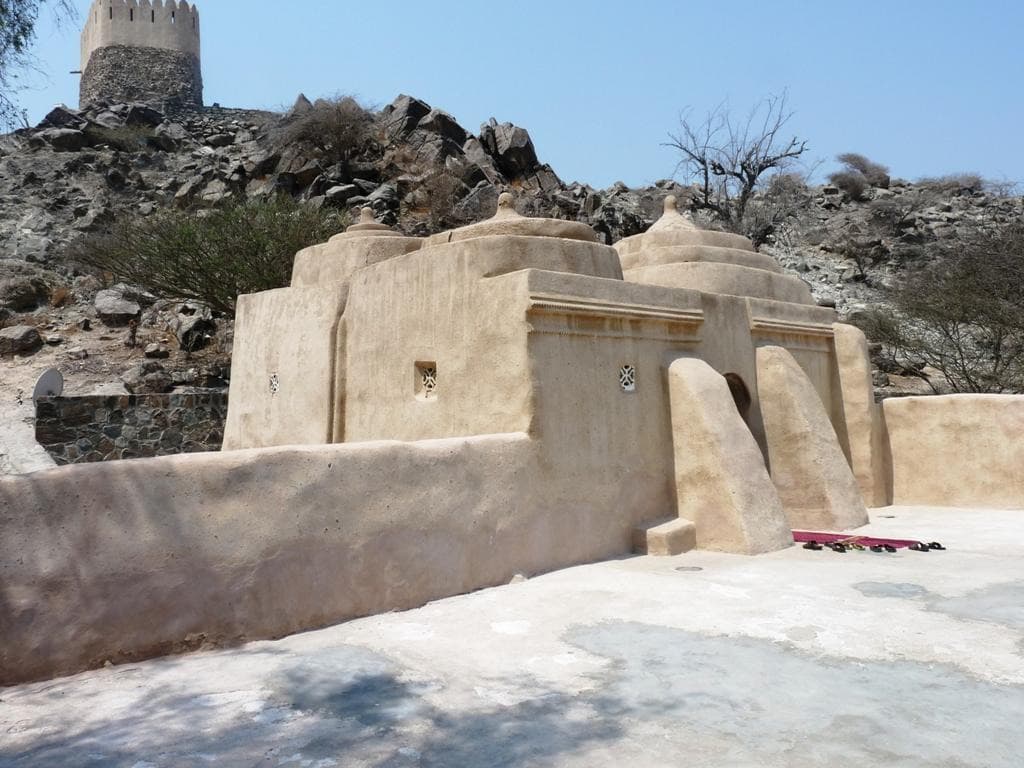
• Situated on the east coast near the Gulf of Oman, the mosque is estimated to have been built in the mid-15th century (around 1446 CE) according to archaeological research. It is a compact square structure with an area of approximately 53 m².
• Constructed from local materials such as stone, mud bricks, and plaster, the roof lacks wooden elements.
• The roof features four domes of different sizes, supported by a central pillar.
• The mosque has a mihrab (niche indicating the direction of Mecca), a small minbar (pulpit), and windows that allow for natural light and ventilation.
• The thick walls are adorned with decorative carvings (dentate motif) and contain niches for preserving Qur’ans and books.
• The Madha–Nahwa enclave complex represents a unique border situation where Omani and Emirati lands meet. Within Madha lies