What's the itinerary?+
• Tiger Hill, the highest point in the Darjeeling region, offers an early morning visit to view the sunrise. The sight of the sun illuminating the majestic snow-capped peaks of Mt. Kanchenjunga with changing colors is stunning. Tiger Hill is part of a nature reserve with grassy areas suitable for picnics. A short walk downhill leads to the Sincheal Temple, which is devoted to the Hindu goddess Durga.
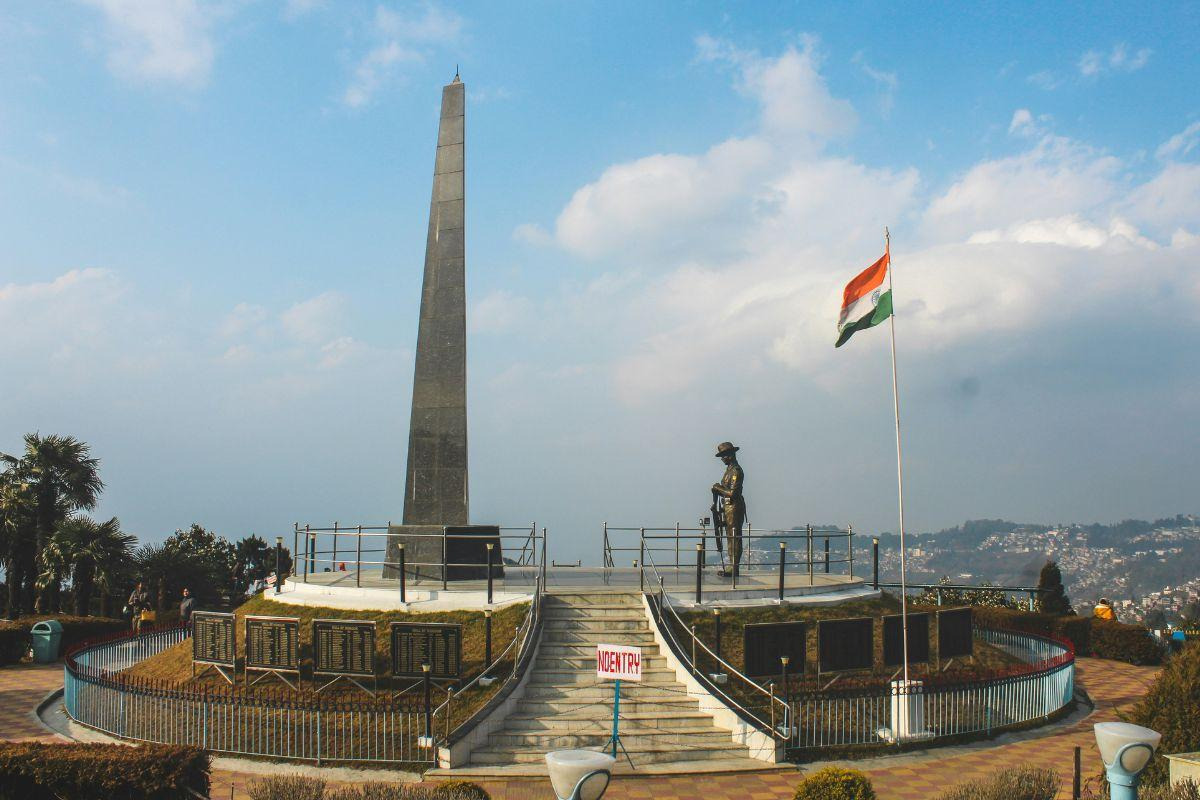
• The heritage train performs a 360-degree turn at the Batasia Loop, located about 5 kilometers from town. This loop was constructed to assist the steam train in navigating the steep landscape and provides a sweeping view of the surrounding mountains. Within the loop, there is a war memorial honoring those who sacrificed their lives in various conflicts involving India since 1947. Nearby, local markets offer items such as bags and other decorative products.
• Located approximately 8 kilometers from Darjeeling town, Yiga Choling is the largest of Darjeeling's three monasteries. Founded in 1875 by Lama Sherab Gyatso, it features images of Buddhist deities and lamas, including Chen Rezig, the Buddha of compassion, and Tsongkhapa, the founder of the Gelugpa sect. A notable highlight is a large 15-foot representation of Jampeyang, the Buddha of the future, and a substantial collection of liturgical texts, including the 108-volume Kangyur, the Tibetan Buddhist canon.
• The Darjeeling Zoo is renowned for its rare red pandas and also houses other uncommon species such as the snow leopard, blue sheep, Siberian tiger, and black bear, allowing visitors to see these animals in one location.
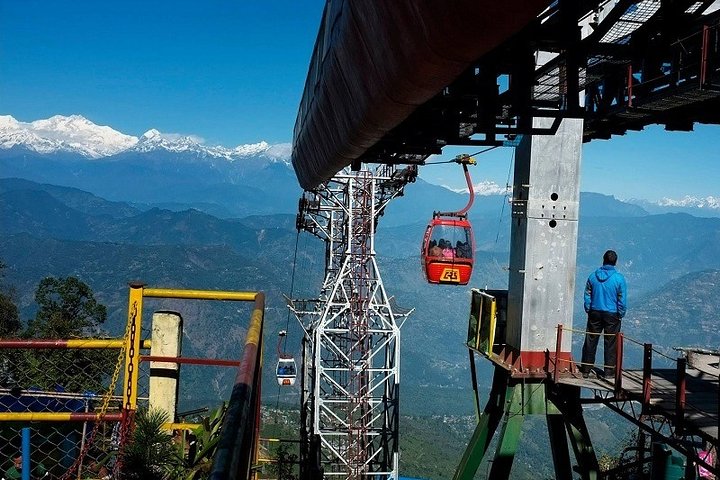
• The cable car operates from Singamari to the Tukvar Tea Estate valley.
• The Rock, named in honor of Tenzing Norgay, one of the first Mt. Everest climbers, offers visitors the chance to attempt rock climbing. Those who prefer not to climb can observe climbers attempting to scale the rock.
• Among the many tea plantations in and around Darjeeling, the Happy Valley and Chitrey Tea Gardens are notable. Chitrey specializes in various tea bushes, providing a view of the entire Kanchenjunga range while enjoying Darjeeling tea.
• Situated within the zoological park, this facility features a range of different species, including beetles, snakes, birds, and various animals.
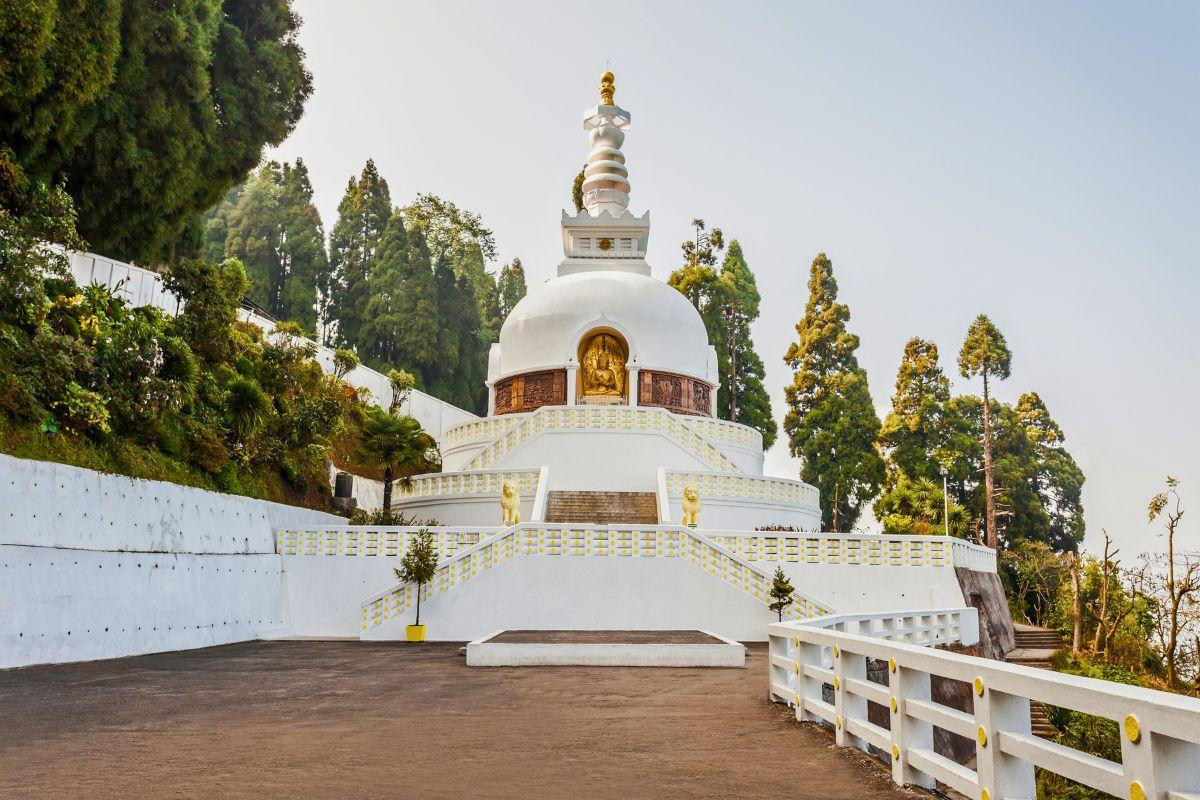
• The Japanese Peace Pagoda was constructed by followers of the Nipponzan Myohoji, a Japanese Buddhist group. It is the tallest free-standing structure in the area and features representations of Buddha. Near the pagoda is the Nipponzan Myohoji Temple, designed in a traditional Japanese style, providing a peaceful atmosphere for meditation and a chance to interact with the resident Japanese monks. Photography is allowed in the temple.
• The Himalayan Mountaineering Institute, which is among the top climbing colleges globally, attracts numerous visitors due to its beautiful location in Darjeeling. It offers impressive views of Kanchenjunga, the world's third highest peak at 8,586 meters. The museum at the institute welcomes around 500,000 visitors each year to view exhibits showcasing climbing art, culture, and achievements. The museum includes sections on Himalayan life, Mount Everest expeditions, and mountaineering history, situated against the backdrop of Kanchenjunga.
• The Tibetan Refugee Self Help Centre, known locally as Hermitage and established on October 2, 1959, was founded by Zhu Dan, with funds from local charity. Initially offering emergency assistance to Tibetan refugees who have journeyed through the Himalayas to reach India, the center holds special significance for Tibetans, as the Thirteenth Dalai Lama stayed in exile in India from 1910 to 1912 due to the Chinese invasion of Tibet. Established as a charitable organization under Indian law, the center began