rovostays·

Heritage walking tour of Ahmedabad's Old Quarter

5.0· 5 reviews3 hoursFrom INR 5402
Heritage walking tour of Ahmedabad's Old Quarter — Cultural & heritage things to do in Ahmedabad

Two hours of guided walking through Ahmedabad's historic Walled City, exploring temples, mosques, and unique community neighbourhoods.

This guided walking tour takes you through the narrow lanes of Ahmedabad's Old Quarter, also known as the Walled City. Over the course of two hours, you'll explore the cultural and historical richness of this area, visiting significant temples, mosques, and intricately carved wooden houses—hallmarks of the city's architectural heritage.

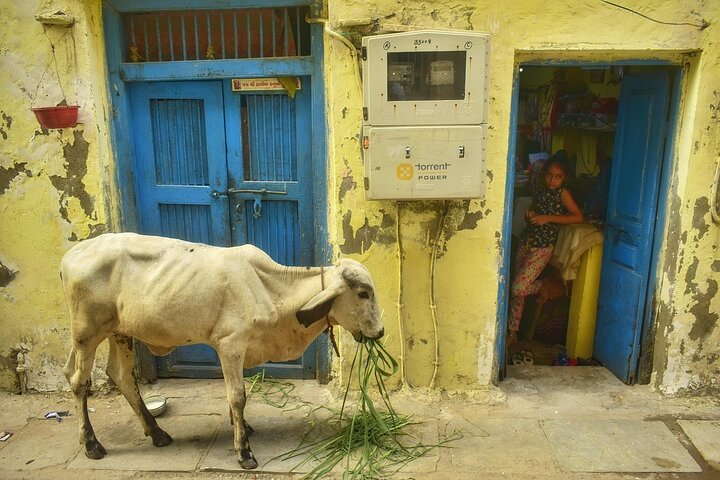
The tour focuses on the local 'pols', or community neighbourhoods, giving insight into the daily life and traditions of Ahmedabad's residents. Wear comfortable shoes as the terrain can be uneven, and be prepared for a leisurely pace to fully appreciate the surroundings.

Places you'll visit

FAQ

Good to know

What's included in this experience?+
• Coffee and tea • Tour guide
What's NOT included?+
• Meals
What should I know before booking?+
• There are accessible public transportation options in the vicinity • Not advisable for individuals with spinal injuries • Not suitable for those who are pregnant • Appropriate for individuals of all fitness levels
What's the cancellation policy?+
To receive a full refund, cancellations must be made at least 24 hours prior to the scheduled departure time.
What's the itinerary?+
• The Kalupur temple is famous for its detailed carvings made from pure Burma-teak and its combination of local, regional, and British architectural influences. Its central entrance showcases sculptures that represent Marathi and Rajasthani folk traditions, while Corinthian styles can be observed on the columns. • Kavi Dalpatram Chowk is a memorial dedicated to the celebrated Gujarati poet and scholar Dalpatram Dahyabhai Travadi, honoring his legacy and contributions to Gujarati literature and social reform. • The dome stands out as a significant architectural feature that originally functioned as a showroom and shop for Calico Mills. Designed by Gautam Sarabhai and Gira Sarabhai, it draws inspiration from Buckminster Fuller's geodesic domes and is constructed from plywood and steel, topped with a canopy of diamond-shaped bent plywood sections connected by steel studs. • The temple is notable for its black marble idol of Lord Rama, depicted in an unusual seated position. Its exterior is adorned with elaborate carvings on brackets and columns, with fluted columns capped with intricate depictions of musicians, dancers, peacocks, and various animal motifs, showcasing remarkable artistry. • This intersection is distinctive for having four houses facing each other, each representing a different architectural style: Persian, Mughal, Maratha, and European. These structures reflect the influences of Gujarati businesspeople who traveled abroad and built residences inspired by their experiences. • Zhaveri Vad gained fame due to the Jain Goldsmith Shantidas Jhaveri, a prominent merchant in the 17th century known for supplying exquisite jewels and luxury items to the Mughal elite, making him one of the wealthiest traders of his time. • The temple is known for safeguarding the footprints of Lord Adishvar beneath a rayan tree. Built in a Hindu-Jain architectural style, it is located next to the Jain library at the end of Doshiwada ni pol, an area predominantly inhabited by the Jain community, reflecting Jain principles such as peaceful coexistence and nonviolence. • Fernandes Bridge Book Market is Ahmedabad's oldest book market, established in 1894. Situated under the historic Fernandes Bridge, it serves as a lively gathering place for book enthusiasts and students, contributing to Ahmedabad’s literary scene for over a century through numerous family-run businesses. • Named for Maneknath, who significantly contributed to the construction of Bhadra Fort in 1411, the square is a cultural and historical site that continues to uphold traditions, including the annual flag hoisting ceremony performed by the descendants of Saint Maneknath. • Built by Sultan Ahmed Shah I in 1424, this mosque is one of the largest in the Indian subcontinent. Made of yellow sandstone, it showcases a synthesis of Islamic, Hindu, and Jain architectural designs.

Visiting Ahmedabad?

Stay with Rovostays

Hand-picked, verified serviced apartments — concierge always included.